
Exploring Dubrovnik through Literature

Written by Niamh Martin
A feature article detailing a view of Dubrovnik, the Medieval City, through a literary lens. A Unique Perspective on the City.
For centuries, poets, writers, artists and more recently, the film industry, have been drawn to Dubrovnik because of its beguiling location, scenery, history and architecture. Increasingly, creative drama is helping to process the city’s more recent destructive drama of war. Bullet holes in the Old City walls are painful reminders of past horrors, but now also provide an opportunity for Dubrovnik to tap into its history and its natural assets and attract drama of a different sort.
Table of Contents
Dubrovnik, a place of inspiration
On occasion, Dubrovnik has simply been an effective Muse. During his residency in the city in 1929, the Irish playwright George Bernard Shaw was moved to write “Those who seek Heaven on Earth must come to Dubrovnik and find it”.
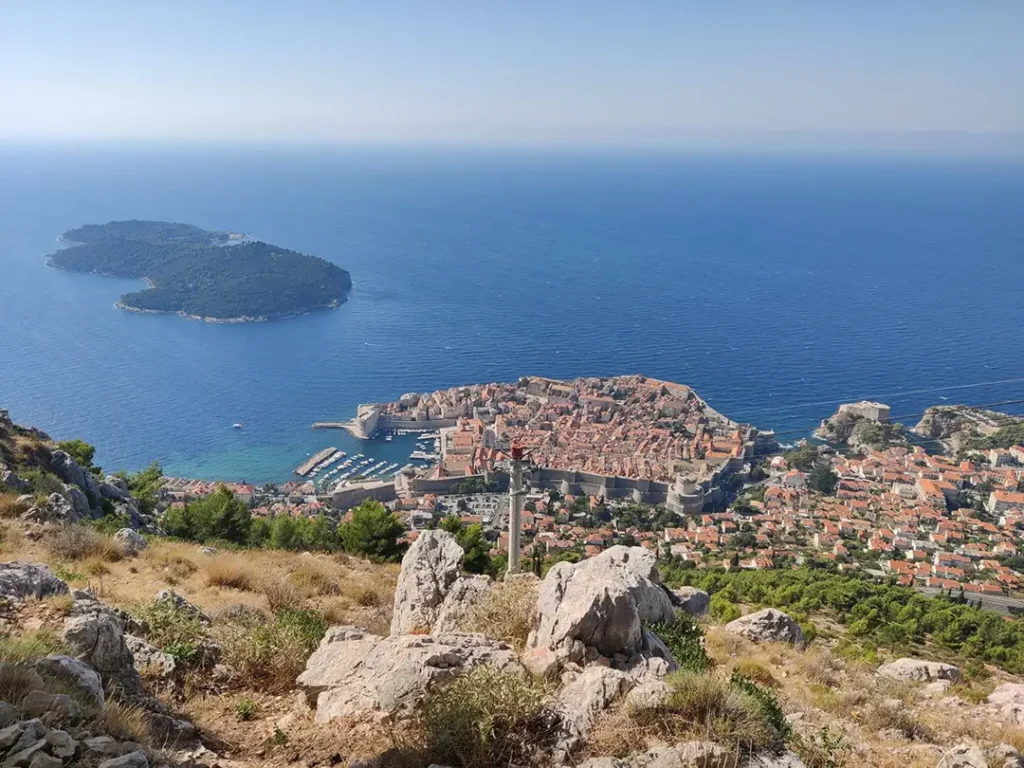
Roughly a century earlier, the English Romantic poet, Lord Byron, took similar inspiration from his experience of Dubrovnik, declaring it to be the “Pearl of the Adriatic”.
More recently, this perfectly preserved baroque old city, protected by vaulting stone walls and rugged fortifications has provided the ideal setting for filming one of the world’s most popular book series, Game of Thrones, by George R.R. Martin.
Authorities in Dubrovnik are working hard to shift the narrative of the city away from its violent past, and by adjusting their lens slightly, visitors to this Medieval City can enjoy the opportunity to see a beautiful place, where cultural drama has been bubbling for centuries.
Standing outside the great walls of the Old City, I am reminded of a phrase by Marin Drzic, Dubrovnik’s 16th century playwright and believed to be a contemporary of William Shakespeare. He wrote “He who puts his best foot forward is a king among men” – and so, it is with great anticipation that I cross my fingers and hope for a comparable outcome for this female explorer.
Entering Heaven
Despite Shaw’s comparison of this city to Heaven, there are in fact two gates through which one can enter Dubrovnik; Pile Gate to the west, often the main point of entry for visitors, and the comparatively less frantic Ploce gate to the east. Both gates feature in the televised Game of Thrones as a route for the royal entourage to the Red Keep in King’s Landing. Pile Gate and the drawbridge and sweeping staircase lead to the archway and will be very familiar to fans of this anthology.
Entering through either gate gives me immediate access to the thick city walls, each offering a different perspective of the old city, but I start at the busy Pile gate entrance. The 2-kilometre, one-way circuit of the walls runs uninterrupted around the city, passing the small western harbour and providing sweeping views down the coast and out to the wooded island of Lokrum. From my vantage point high on the walls, I get an appreciation of the extensive wartime damage to the city from the close-up view of bright orange rooftops stretching in every direction, the tell-tale sign of restoration work undertaken in these parts.
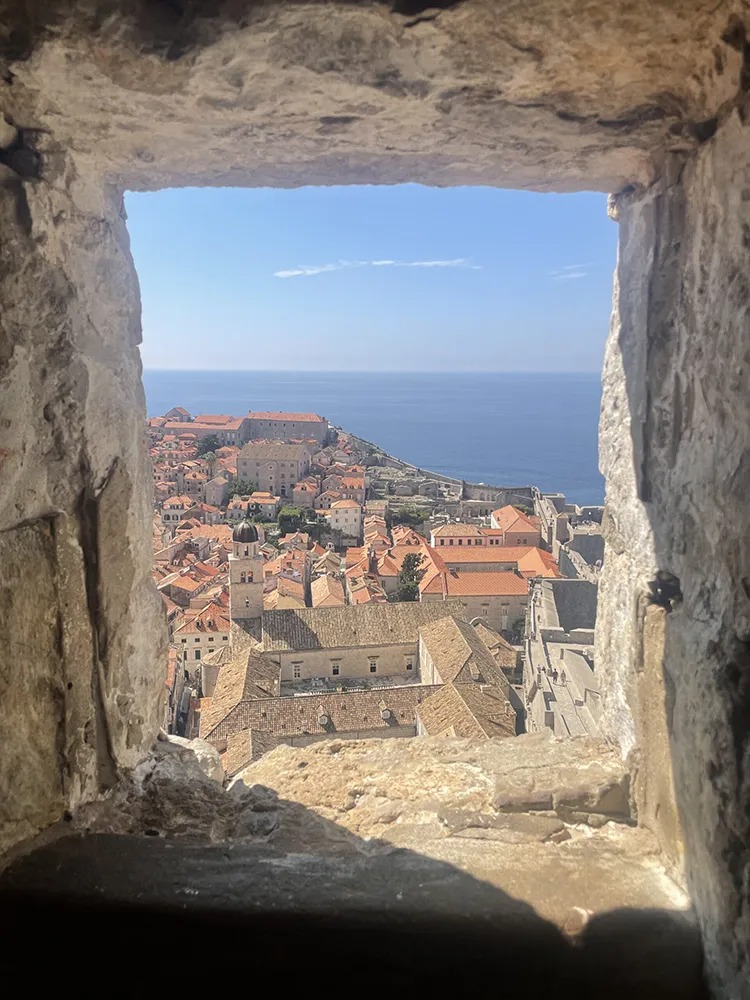
I pass Ploce gate, where a sense of history hangs heavily – the medieval drawbridge and portcullis provide a momentary sense of the militaristic purpose of these fortifying walls, temporarily giving my walk a curious sense of solemnity.
Just before returning to Pile gate, I make the brief climb up the Minceta Tower which provides another coastal outlook as well as a first sighting of St. Lawrence (or Lovrijenac) Fortress, overlooking the bay outside the western wall of the city. Both of these landmarks are key features within Game of Thrones, acting respectively as the place where Daenarys keeps her dragons and the Red Keep.
A modern city with its roots in the past
Inside the walls, Dubrovnik is a sanctuary of relative calm. Despite the popularity of this city among mammoth-sized cruise ships that arrive daily, city officials have made some sensible decisions to maintain the fabric of this medieval municipality. Even on the main thoroughfare, Stradun, shop-signs and advertisements are forbidden, and cars and tour buses are left firmly outside the city walls.
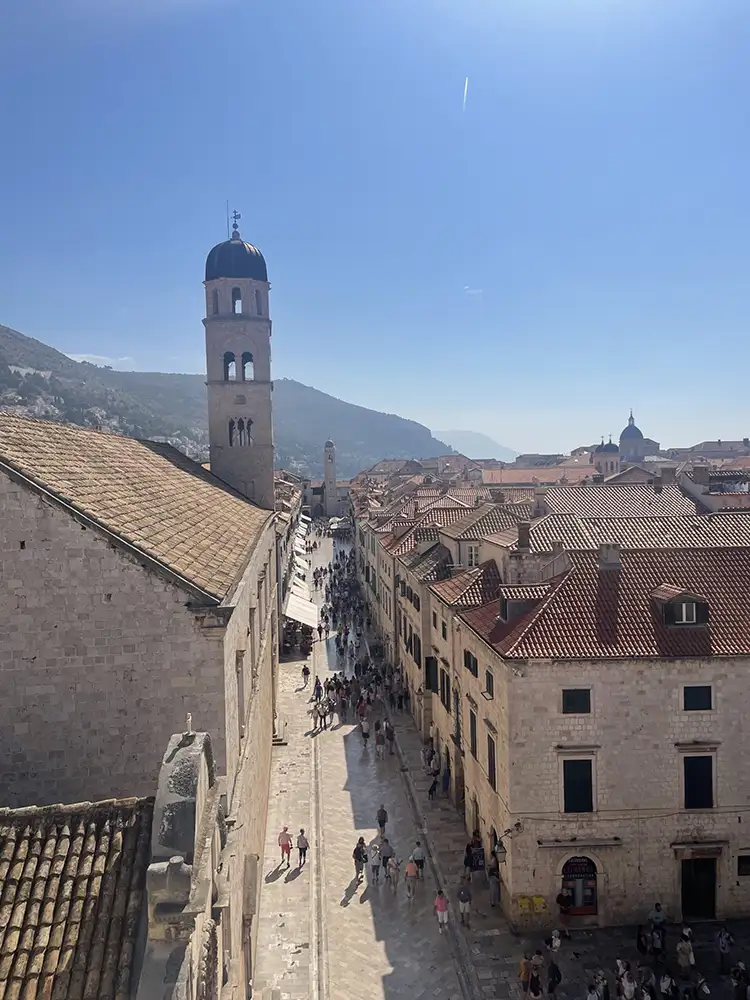
This “retro” atmosphere provides a means of immersing oneself into the world of Drzic’s 16th century Dubrovnik, where many churches still standing (Dominican and Franciscan) have featured in his plays, as well as the Old Pharmacy (just inside Pile gate), founded in 1317 to serve the Franciscan monks and later the wider community. It is still functioning and is believed to be the third oldest pharmacy in Europe.
The Rector’s Palace, an elegant 14th-century Gothic-Renaissance palace museum located near the old port, is where Drzic’s seminal work, Uncle Maroye, was first performed. A statue has been placed here to mark the occasion. It also marks the house where Drzic was born, but which was unfortunately destroyed in the earthquake of 1667.
Another prominent Uncle Maroye landmark is the Onofrio fountain, located just inside Pile gate. In this play, it is known as the place where fairies grant visitors the gift of eternal youth. In reality, it is a solid, domed circular structure with 10 small gargoyles bursting out of its sides, spouting water. In the intense Mediterranean heat, access to its cool running water is certainly a popular and welcome gift, even if its restorative effects last less than eternity.
Just outside the western wall is the 11th century fortress Lovrijenac, built primarily to resist the substantial Venetian threat of invasion. Its design shows that attacks from the sea were considered more likely, the thickness of the walls facing towards the sea reach 12 metres, while those facing inwards are a mere 60 centimetres thick. Lovrijenac’s use as a theatre venue is a recent addition to the history of the fort, with performances of Shakespeare’s Hamlet (played by actors such as Derek Jacobi, Daniel Day-Lewis and Goran Visnijc), now considered an annual feature at Dubrovnik Summer Festival.
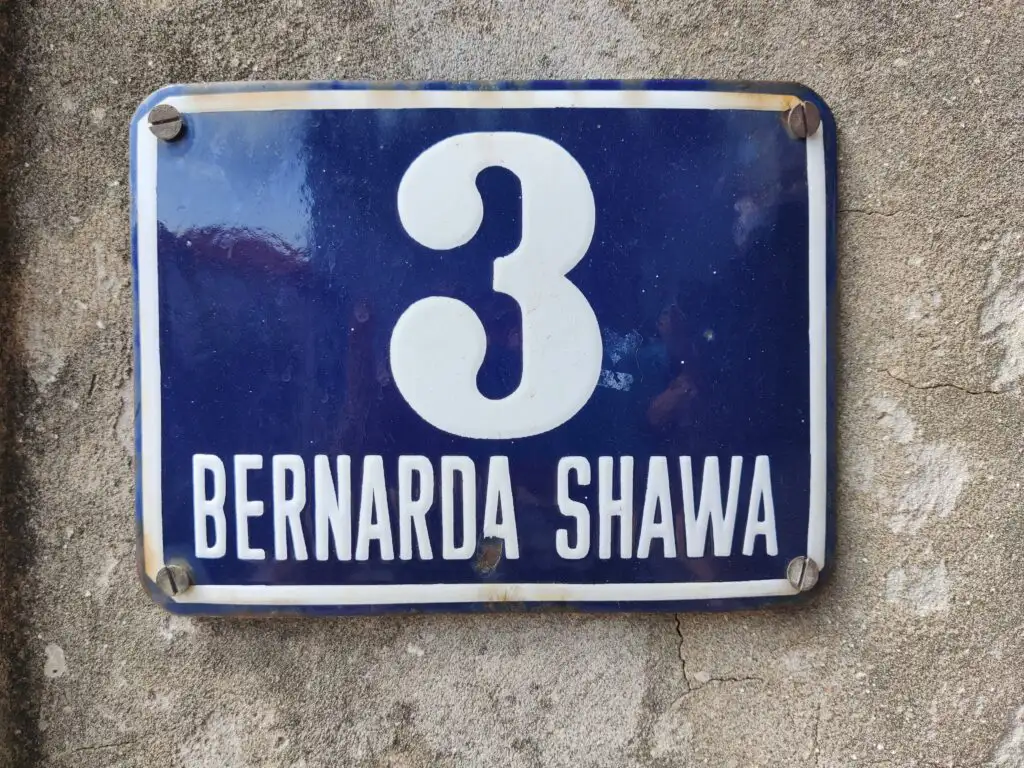
At the busy but joyous Algebra Bookshop, located on Stradun, I speak to Luca, an assistant with a contagious enthusiasm for all things literary. The shop is literally bursting with books, filled from floor to ceiling with English, French, German and of course Croatian books. There is also a whole section dedicated to Croatian history and travel guides. On hearing my Irish accent, Luca asks if I “know about the George Bernarda Shawa” area of town. Ironically, the street signs for “Bernarda Shawa” are not located in the town, but on the path leading out of Dubrovnik, heading towards the base of Mount Srd.
Birds eye view
I decide to take the literary prompt and walk along the road named for George Bernard Shaw, on my way to climb the imposing height that is Mount Srd. Although not quite at the altitude of Heaven, Mount Srd’s summit at 412 metres does offer a birds-eye view of the city and the Dalmatian coast. The mountain top refuge, the Panorama Restaurant, is a welcome sight after my climb and also, as I look down upon the city, is an ideal place to reflect on my Dubrovnik literary journey.
To spend time in Dubrovnik is to feel the drama of a city that has been tossed through centuries of conflict, loss and heartache, only to emerge in more recent history as a place of enduring peace and great beauty. It is a work in progress, but it is working hard to turn past trauma into future triumph. With recent global exposure, thanks to Game of Thrones, there is a feeling in the air that this dramatic potential will only embed further and that in time, this “Pearl of the Adriatic” will indeed quickly become the world’s oyster.
Where to Eat
Dubrovnik has many very fine eateries offering local cuisine using local ingredients, including Bistro Tavulin which has received mentions in the Michelin Guide for the past six years. It provides “classic Croatian dishes with subtle modern touches and a Mediterranean edge”. Our 3 course meal was colourful, flavoursome and very reasonably priced.
Panorama Restaurant on the summit of Mount Srd.