
Agatha Christie’s Torquay

Written by Niamh Martin
Table of Contents
Agatha Christie’s Literary Tour of Torquay
The Agatha Christie Torquay Literary Mile
Agatha Christie was born and lived her formative years in Torquay, Devon. For the avid Christie fans, there are a number of places of interest all within walking distance, directly connected with the author. These attractions are formally gathered under the banner of the “Agatha Christie Mile“, which was officially launched by Agatha’s daughter, Rosalind Hicks in 1990. Download the beautifully illustrated digital guide to the Agatha Christie Mile.
Highlights include:
- The Grand Hotel – where Agatha and Archie Christie spent their honeymoon after their wedding on Christmas Eve, 1914.
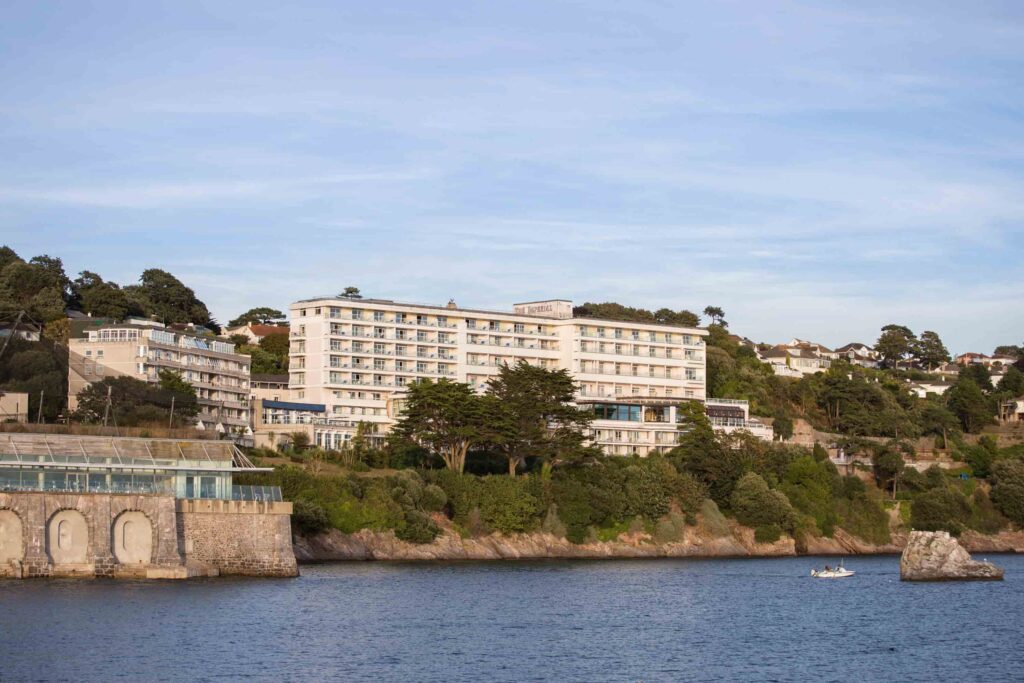
- The Imperial Hotel – where Agatha attended many social occasions in the grandeur of the elegant ballroom. This hotel is also referenced in three of Agatha’s books – “Peril at End House“, “The Body in the Library” and “Sleeping Murder“.
- Torquay Station – In 1990, the Orient Express brought Hercule Poirot (actor David Suchet) to the station to meet Miss Marple (actor Joan Hickson) for the first and only time. The occasion was the Agatha Christie Centenary Celebrations, as Christie was determined that the characters would never meet in person in her novels.
- Princess Pier – One of the young Agatha Christie’s favourite pastimes was to roller skate on Princess Pier, a photo of her doing this is on display at Torquay Museum, wearing an ankle length skirt and large feathered hat.
- Torquay Museum – This is Devon’s oldest museum and is the home of the Agatha Christie Centenary Exhibition. Created in 1990 with the support of the Christie family, it displays personal items loaned by the Christie family as well as previously unseen photos of Agatha Christie throughout her life.
- Torre Abbey – This is Torquay’s oldest building, dating back to 1196, and is now home to The Agatha Christie Memorial Room, which features her favourite armchair, her 1937 Remington Portable typewriter and her plotting notebook, containing the handwritten manuscript of the best seller novel “A Caribbean Mystery“.
- Princess Gardens – Opened in 1894 and located close to the pier. These Gardens were featured in the novel “The ABC Murders“.
- The Pavilion – Opened in 1912, this elegant building was a grand concert hall and the music-loving Agatha attended many concerts here. Now closed and in a state of disrepair, it has recently been the subject of bids for renovation, organised by Torbay Council.
- Beacon Cove – Known at the turn of the 20th Century as the “Ladies Bathing Cove”, Agatha Christie was a frequent visitor here and, on one occasion, had to be saved by a boatman after getting into difficulties.
- Agatha Christie Bronze Bust – This is the only one on view in the world and was unveiled in 1990 by Christie’s daughter, Rosalind Hicks. It is a small representation of the author and is the work of Dutch sculptor, Carol Van Den Boom-Cairns.
Who was Agatha Christie?
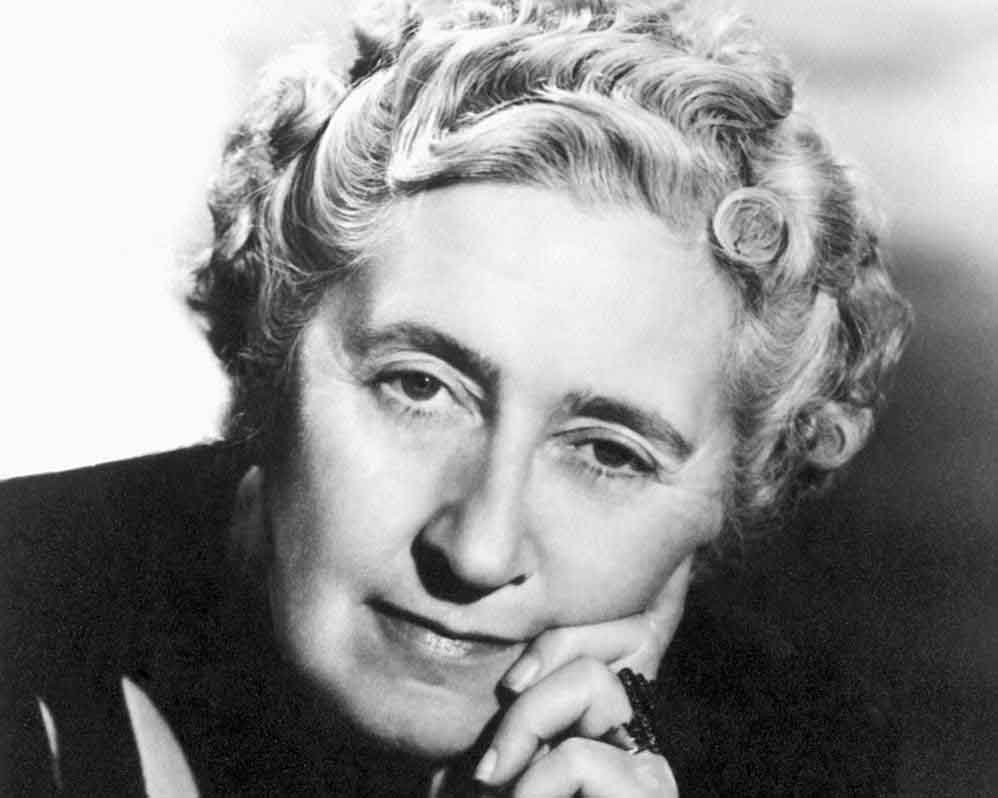
Dame Agatha Christie was an English detective novelist and playwright born in Torquay, Devon. Nicknamed the “Queen of Crime”, she has written 66 detective novels, 14 short story collections and is also the author of the world’s longest running play – The Mousetrap. Her books have sold over a billion copies in the English language and a billion in translation in over 100 countries, making her the best-selling novelist of all time.
Early Life
Born on September 15, 1890 in Torquay, Devon, Agatha Christie remained linked to the English Riviera for much of her life, writing her first novel while working at the Dispensary in the temporary war hospital at Torquay Town Hall. Even when she eventually moved away, the area remained close to her heart for the rest of her life. As a result of her love and extensive knowledge of the area, twenty of her books were either set locally or inspired by the surrounding Devon scenery.
Agatha’s father, Frederick Miller, was a wealthy American, and her mother, Clara, from Ireland, was the niece of Frederick’s father’s second wife. Agatha was the youngest of three children, described by her mother as a “much-loved afterthought”, arriving as she did ten years after her brother, Louis “Monty” and eleven years after her older sister, Madge. The family lived a comfortably well-off existence at Ashfield, a large home not far from the sea and the yacht club that was a popular social outlet for the Miller family.
When Agatha was five, the family’s investments in America took a downswing and, in order to economise, they rented out their home at Ashfield and spent some time in France. It was here that Agatha began to learn basic French, which she infamously used in her novels in later years. Her time in France also marked the start of her lifelong love of travel.
Shortly after her eleventh birthday however, Agatha’s world was turned upside down by the sudden death of her father. Agatha subsequently became her mother’s closest companion, with the pair moving to Paris to come to terms with their grief. This continued Agatha’s love affair with France, where she spent time in a succession of boarding schools and eagerly embraced the Parisian culture. Agatha and her mum returned to Devon in 1910, following a three month trip to Cairo, Egypt.

Career
Following her return to the UK and the outbreak of the First World War, Agatha worked as a nurse with the Voluntary Aid Detachment in a Red Cross Hospital in Torquay. In 1915, she joined the hospital dispensary and trained under an experienced pharmacist, until she completed her exam of the Worshipful Society of Apothecaries in 1917. It was during this time that Agatha decided to write a detective story (she reported later in her autobiography that she primarily did this because her sister Madge laid a bet that she couldn’t write a good one).
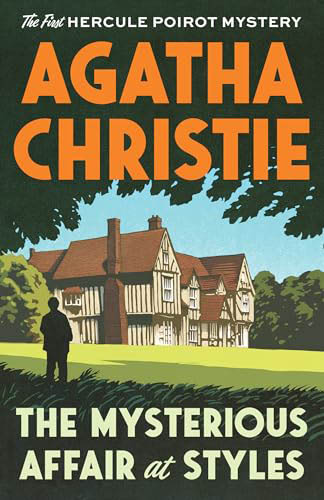
Her first published book – The Mysterious Affair at Styles – saw the introduction of the world’s most famous detective, Monsieur Hercule Poirot (1920). The murder method used was, naturally, poison, putting Agatha’s newfound expertise from the dispensary to excellent creative use! The murderer’s application of poison was so well described in fact, that when the book was eventually published, Agatha received an unprecedented honour for a writer of fiction – a review in the Pharmaceutical Journal.
In 1922, Agatha and her husband, Archie, undertook a “Grand Tour” across the British Empire (as part of Archie’s job to promote the Empire Exhibition of 1924). Agatha thrived during this trip, absorbing and loving the cultural differences and nuances she was exposed to. On her return, her second novel – The Murder on the Links – was published (1923).
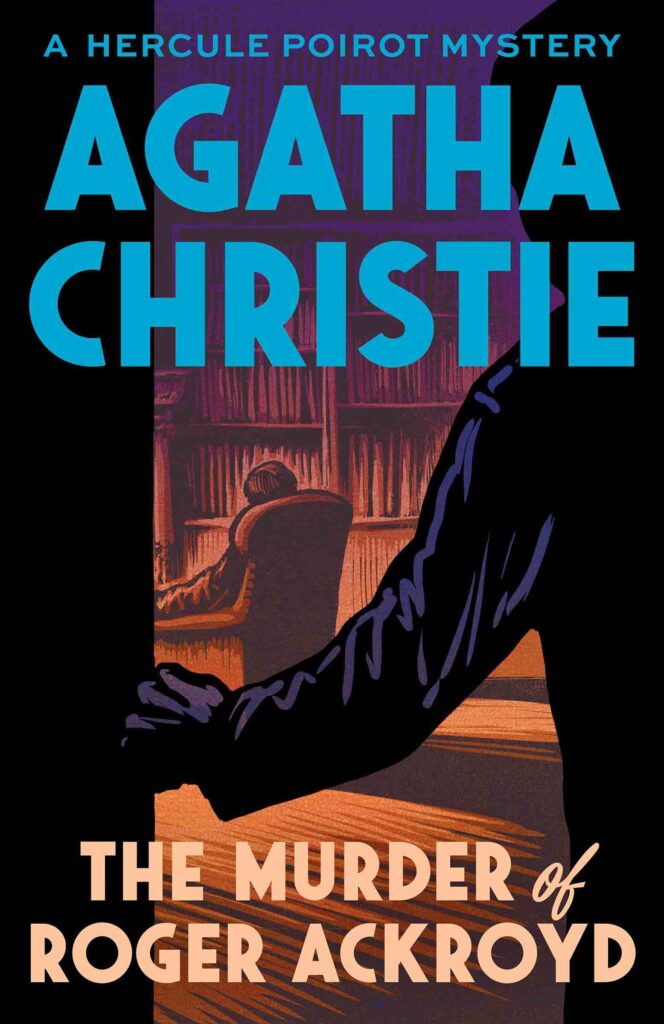
Following a change of publishers from The Bodley Head to (now called) HarperCollins, her next novel – The Murder of Roger Ackroyd – went on to become one of the most famous murder mystery novels of all time, with extremely impressive sales that ultimately defined Agatha’s hugely successful career. Collins had offered her a three-book contract and a £200 advance in 1924 and she remained with Collins until her death. Agatha Christie’s plots and characters for her subsequent novels and plays were to be heavily influenced by incidents occurring in her personal life, as well as the subsequent extensive travel that she enjoyed across, what were very exotic destinations for the time, including the Middle East (particularly Iraq), Caribbean, Egypt and Europe. (For a full list and timeline of publications, see “Bibliography” below).
Family
In 1912, Agatha attended a party at Ugbrooke House, a stately home near Exeter in Devon. Here she met a dashing and very charming Archie Christie, a sub-altern and qualified aviator with the Royal Flying Corps.
They married at All Saints Church in Torquay on Christmas Eve 1914 and spent their honeymoon night in the Grand Hotel, Torquay. On the 27th December Archie returned to the frontline in France. They met infrequently during the war years until, in January 1918, Archie was posted to the War Office in London and the couple bought their first marital home there.
Agatha gave birth to their only child, Rosalind, on 5th August 1918. Settled in London (5 Northwick Terrace, St John’s Wood), Agatha began her writing career in earnest, with her first novel – The Mysterious Affair at Styles – being published in 1920. However by 1926, Agatha Christie’s personal life became very difficult, with two life-changing events occurring within a very short space of time. Firstly, the death of her adored mother in April of that year followed by the revelation of her husband having an affair with a family friend, Nancy Neele.
In December 1926 she sparked a police search when her car was found abandoned in a chalk pit at Newlands Corner on the Surrey Downs. Several days later she turned up in a hotel in Harrogate (now called The Old Swan) booked in under the surname of the woman who was revealed to be her husband’s mistress. Widely believed to have been a nervous breakdown brought on by the extreme trauma of grief, Agatha, who was an intensely private person, never spoke again of this time with friends or family.
Divorce from Archie was granted in 1928, though she continued to use his surname for professional reasons. In 1930, Agatha married Sir Max Mallowan, a career archaeologist. For many years after they married, the couple spent several months each year on expeditions in Iraq and Syria. They also split their time between several country and town homes in England, however her favourite residence was Greenway House in Devon, which she purchased in 1938, with the proceeds of her bestselling detective novels and the sale of her childhood home in Torquay.
Agatha Christie’s only grandchild, Mathew Prichard, was born in September 1943 and is the chairman of Agatha Christie Ltd.
Death
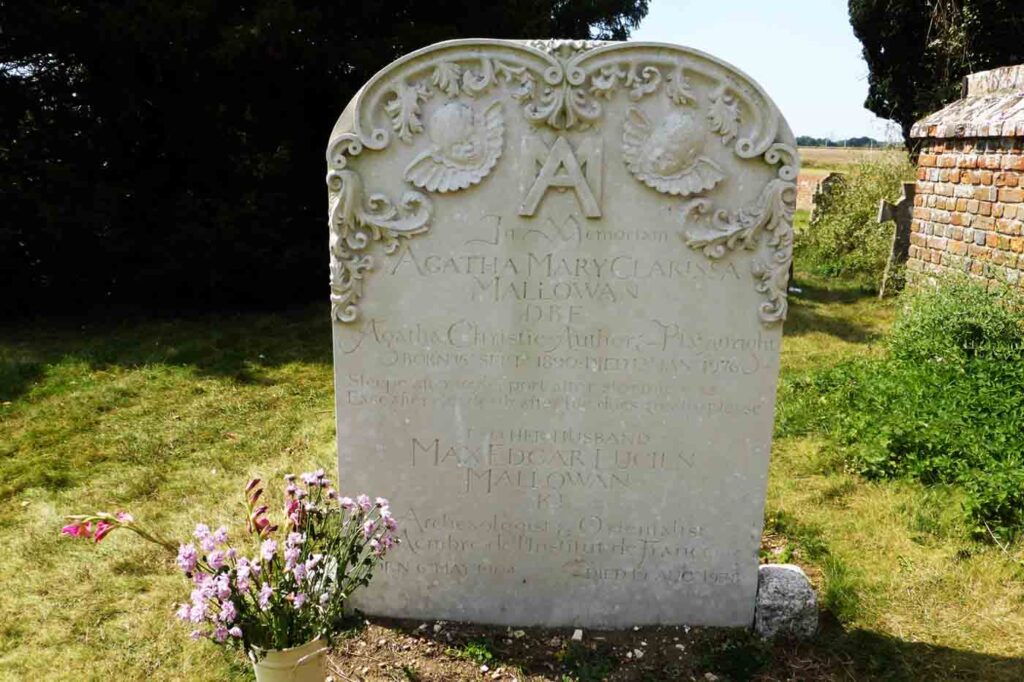
Agatha Christie had been in poor health for several years and on the 12th January 1976, she died at her home in Wallingford, Oxfordshire, aged 85. On the day she died, two London theatres dimmed their lights; St Martin’s Theatre, where her record-breaking “The Mousetrap” was at the time in its 24th year and the Savoy Theatre, where “Murder at the Vicarage” was having its 200th performance. She is buried in the churchyard of St. Mary’s in Cholsey, near Wallingford in Oxfordshire.
Two novels were published posthumously; Sleeping Murder, featuring one of her most famous characters, Miss Marple, was published later in 1976, and her autobiography (Agatha Christie: An Autobiography) published in 1977.
Where Agatha Christie Lived
Agatha Christie had two main homes during her time in Devon.
She was born in and lived her childhood years at the handsome Victorian villa of Ashfield, situated on the outskirts of Torquay within walking distance of both the seafront and the countryside. The house is no longer standing today, but the site where it once stood on Barton Road is marked with a blue plaque.
Agatha Christie then spent a number of years living in France and London (see “Early Life” and “Family” sections above), before purchasing a large Georgian house, Greenway House in Devon, which she used as a holiday home with her second husband, Max Mallowan.
Agatha Christie’s main residence for the last 42 years of her life was in Wallingford, Oxfordshire. In 1934, she and her husband Max purchased Winterbrook House, an 18th century property on the banks of the river Thames. She remained here until her death in 1976.
Agatha Christie’s House – Greenway Estate, Devon
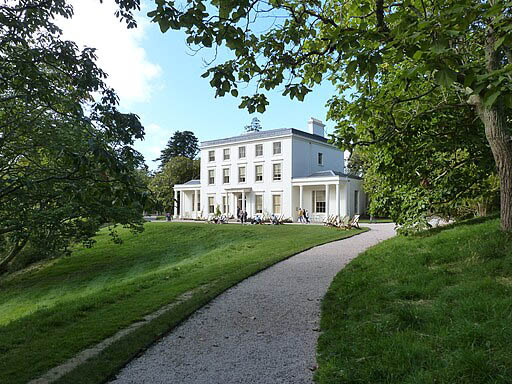
Agatha bought Greenway in 1938, with the proceeds of her bestselling detective novels and the sale of her childhood home in Torquay. She called it “the loveliest place in the world” because of its positioning overlooking the River Dart and the Devon countryside. This house became a place of relaxation and social events with family and friends, so much so, that Christie never wrote any of her novels here, using it instead as a dedicated holiday home for rest and respite.
Today, Greenway House is an extremely well curated museum, which provides an excellent and intriguing insight into how Christie and her husband, Max Mallowan, lived, socialised and travelled widely in the mid 1900’s. The Estate was gifted to the National Trust in 2000, with the gardens opening to the public in 2002. The House was however closed to the public for a number of years, as it was the retirement home of her daughter and son-in-law. Following her daughter Rosalind’s death in 2004, the house passed to the National Trust. Extensive renovation was undertaken and following receipt of generous donations from Christie’s grandson, Mathew Prichard, the house and the majority of its content are now available to be viewed and enjoyed by visitors to the Greenway Estate.
This House and Gardens are a genuine “must-see” for any Christie fans. As you progress from room to room, the warmth, curiosity and intellect of Christie emerges piece by piece. There are spaces dedicated to social gatherings, where Agatha liked to host reading parties among her close friends and family. Although she never wrote while she was here, she enjoyed reading her latest stories and encouraging her rapt audience to guess “whodunnit”. Three books are directly inspired by Greenway, with specific sites easy to identify from the descriptions (Dead Man’s Folly, Five Little Pigs and Ordeal by Innocence).
This was a much-loved family home and Agatha and her family would spend summers and Christmases here with friends, relaxing by the river, playing croquet and clock golf. Rambling around the grounds and gardens, it is possible to imagine the freedom and safety that Christie and her family enjoyed here, away from the increasingly intrusive press and public. Her husband Max referred to it as their “Fairy-tale House” because of its relative solitude and privacy. It also provided a very welcome respite for him (and Agatha) from the extensive physicality of his archaeological tours.
The house is also a detailed reflection of the deep interest that both Agatha and Max had for travel, archaeology and history. Agatha’s developing interest in archaeology after her divorce form Archie Christie brought her to Iraq and Syria and is where she first met Max (her second husband), the world-renowned archaeologist. Agatha continued to travel with and assist Max on his archaeological digs in the Middle East for many years. There are numerous and hugely varied examples of items they brought back with them, extending across many rooms and walls.
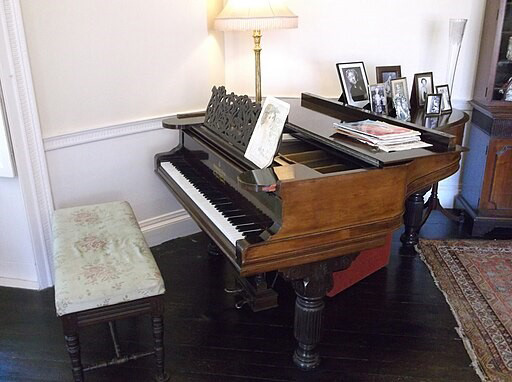
There’s also proof of Agatha’s talents as a concert-class pianist who also composed her own music. She was however known to be exceptionally shy and so rarely performed publicly. The family were great collectors, and the house is filled with an important and varied collection of ceramics, Tunbridgeware, silver, and books, including first editions of her novels.
The tranquil lifestyle that Agatha and her husband had found and fostered was bluntly interrupted in 1944 when Greenway House was requisitioned, initially to provide a safe place for child evacuees, and then transferred for use by the U.S. Coastguard, until Christmas Day 1945. On their return to the house, Christie was relieved and delighted to see that the house had been left relatively undamaged. They were also pleasantly surprised to find a frieze painted around the entire wall area of their beloved library. A Lieutenant from the US Coastguards had painted it, depicting all of the places that their flotilla had been, including Bermuda, Morocco and even Greenway itself. The frieze was maintained and is still in place to be viewed today.
From walled gardens to riverside woodland, the informal gardens at Greenway are peaceful and relaxing. There are hidden gems such as a restored vinery and beach house, views down river to take your breath away and deckchairs in front of the house to relax in. A visit to Greenway isn’t complete without a trip down to the bottom of the garden, and the Boathouse, scene of the crime in Poirot’s Dead Man’s Folly, and one of the most tranquil spots at Greenway.
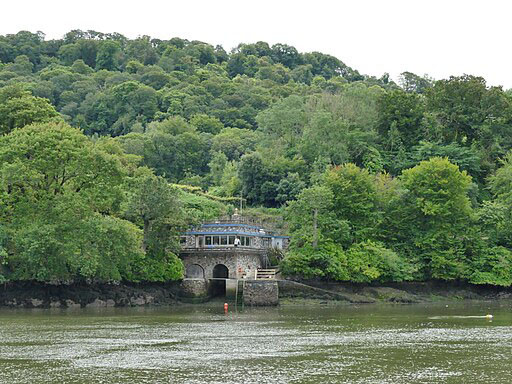
Greenway Estate has varied opening hours and a check on the National Trust’s website is highly advised in advance of any trip.
Standard adult entry: £15, children £7.50
It is possible to hire Greenway as a venue and also to stay overnight in its self-contained apartment, continuing Greenway’s legacy as a holiday retreat.
Travelling to Greenway is an adventure in itself. It is possible to go the straightforward way, by car – but in true Christie style, why not take the more adventurous and mysterious route, using a combination of train and boat. Regular ferries will deposit visitors directly onto Greenway pier – but do check out ferry times and availability before you go.
Agatha Christie’s Bibliography
Hercule Poirot Books In Publication Order
- The Mysterious Affair At Styles (1920)
- The Murder on the Links (1923)
- Poirot Investigates (1924)
- The Murder of Roger Ackroyd (1926)
- The Big Four (1927)
- The Mystery of the Blue Train (1928)
- Black Coffee (1930)
- Peril at End House (1932)
- Lord Edgware Dies / Thirteen at Dinner (1933)
- Three Act Tragedy / Murder in Three Acts (1934)
- Murder on the Orient Express / Murder in the Calais Coach (1934)
- Death in the Clouds / Death in the Air (1935)
- The A.B.C. Murders (1936)
- Murder in Mesopotamia (1936)
- Cards on the Table (1936)
- Dumb Witness / Poirot Loses A Client (1937)
- Death on the Nile (1937)
- Murder in the Mews / Dead Man’s Mirror (1937)
- Appointment with Death (1938)
- Hercule Poirot’s Christmas / Holiday for Murder / Murder for Christmas (1938)
- Sad Cypress (1940)
- One, Two, Buckle My Shoe / Overdose of Death (1940)
- Evil Under the Sun (1941)
- Five Little Pigs / Murder in Retrospect (1942)
- The Hollow / Murder after Hours (1946)
- The Labours of Hercules (1947)
- Taken at the Flood (1948)
- Mrs. McGinty’s Dead / Blood Will Tell (1952)
- After the Funeral / Funerals are Fatal (1953)
- Hickory Dickory Dock (1955)
- Dead Man’s Folly (1956)
- Cat Among the Pigeons (1959)
- The Adventure of the Christmas Pudding (1960)
- The Clocks (1963)
- Third Girl (1966)
- Hallowe’en Party (1969)
- Elephants Can Remember (1972)
- Curtain (1975)
Hercule Poirot Collections In Publication Order
- The Labors of Hercules (1947)
- The Witness for the Prosecution (1948)
- The Under Dog and Other Stories (1951)
- Poirot’s Early Cases (1974)
- Hercule Poirot’s Casebook (1984)
- The Harlequin Tea Set and Other Stories (1997)
- The Double Clue (2016)
- The Grey Cells of Mr. Poirot (2019)
Hercule Poirot Short Stories/Novellas In Publication Order
- The Jewel Robbery at the Grand Metropolitan (1923)
- The Tragedy at Marsdon Manor (1923)
- The Affair at the Victory Ball (1923)
- The Adventure of the Western Star (1923)
- The Adventure of the Egyptian Tomb (1923)
- Afternoon At The Seaside (1962)
- The Patient (1962)
- The Witness for the Prosecution (1983)
- Four and Twenty Blackbirds (1989)
- The Million Dollar Bond Robbery (1998)
- The Disappearance of Mr.A Davenheim (2012)
- Market Basing Mystery, The (2013)
- The Mystery of Hunter’s Lodge (2013)
- The Cornish Mystery (2013)
- Problem at Sea (2013)
- The Under Dog (2016)
- The Case of the Missing Will (2019)
Miss Marple Books In Publication Order
- The Murder at the Vicarage (1930)
- The Body in the Library (1942)
- The Moving Finger (1942)
- A Murder is Announced (1950)
- They Do It With Mirrors (1952)
- A Pocket Full of Rye (1953)
- 4:50 From Paddington (1957)
- The Mirror Crack’d from Side to Side (1962)
- A Caribbean Mystery (1964)
- At Bertram’s Hotel (1965)
- Nemesis (1971)
- Sleeping Murder (1976)
Miss Marple Collections In Publication Order
- The Thirteen Problems (1932)
- 13 Clues for Miss Marple (1966)
- Miss Marple’s Final Cases (1979)
- Miss Marple: The Complete Short Stories (1985)
- Miss Marple Short Stories (2005)
Tommy and Tuppence Books In Publication Order
- The Secret Adversary (1922)
- Partners in Crime (1929)
- N or M? (1941)
- By the Pricking of My Thumbs (1968)
- Postern of Fate (1973)
Tommy & Tuppence Short Stories/Novellas In Publication Order
- The Affair of the Pink Pearl (1929)
- The House of Lurking Death (1995)
Superintendent Battle Books In Publication Order
- The Secret of Chimneys (1925)
- The Seven Dials Mystery (1929)
- Cards on the Table (1936)
- Murder is Easy / Easy To Kill (1939)
- Towards Zero (1944)
Plays In Publication Order
- The Mousetrap (1952)
- Spider’s Web (1954)
- Verdict (1958)
- Rats (1962)
Harley Quin Books In Publication Order
- The Mysterious Mr.Quin (1930)
- The Love Detectives (1993)
- The Coming of Mr. Quin (2012)
Standalone Novels In Publication Order
- Giant Bread (As:Mary Westmacott) (1930)
- The Sittaford Mystery / The Murder at Hazelmoor (1931)
- Unfinished Portrait (As:Mary Westmacott) (1934)
- Why Didn’t They Ask Evans? (1934)
- And Then There Were None / Ten Little Indians (1939)
- Absent in the Spring (As:Mary Westmacott) (1944)
- Death Comes as the End (1944)
- The Rose And The Yew Tree (As:Mary Westmacott) (1947)
- Crooked House (1949)
- They Came to Baghdad (1951)
- A Daughter’s a Daughter (As: Mary Westmacott) (1952)
- Destination Unknown (1954)
- The Burden (As:Mary Westmacott) (1956)
- Ordeal by Innocence (1958)
- The Pale Horse (1961)
- Endless Night (1967)
- 13 at Dinner (1969)
- Passenger to Frankfurt (1970)
Short Story Collections In Publication Order
- The Regatta Mystery and Other Stories (1932)
- The Hound of Death (1933)
- The Listerdale Mystery and Eleven Other Stories (1934)
- Parker Pyne Investigates (1934)
- The Witness for the Prosecution and Other Stories (1948)
- Three Blind Mice and Other Stories (1952)
- Double Sin and other stories (1961)
- Star over Bethlehem, and other stories (1965)
- The Golden Ball and Other Stories (1971)
- The Mousetrap and Other Plays (1978)
- Problem at Pollensa Bay (1985)
- While the Light Lasts (1997)
- Bloodstained Pavement and Other Stories (2003)
- Death by Drowning (2003)
- Seven Deadly Sins (2004)
- Masterpieces in Miniature (2005)
- The Detectives – Short Stories (2005)
- The Tuesday Night Club and Other Stories (2005)
- The Red Signal and Other Stories (2005)
- The Listerdale Mystery (2005)
- Masterpieces of Mystery and the Unknown (2006)
- The Actress and Other Short Stories (2006)
- A Fruitful Sunday and Other Short Stories (2006)
- Miss Marple and Mystery (2008)
- Midwinter Murder (2020)
- A Deadly Affair (2022)
Non-Fiction Books In Publication Order
- Come, Tell Me How You Live (1946)
- Agatha Christie: An Autobiography (1977)
- The Grand Tour: Around the World with the Queen of Mystery (2012)
Did you know?
Despite earning a reputed £100-200k a year in royalties, Dame Agatha Christie’s will, published on 30 April 1976, revealed she had left only £106,683, having managed to dispose of most of her wealth before she died.
The hugely successful play Mousetrap was first written as a radio sketch called Three Blind Mice for the 80th birthday of Queen Mary. It is said to have made more than £3m, which she gifted to her only grandson, Mathew Prichard.
International Agatha Christie Festival
This is held annually in Torquay in September. For more information, visit https://www.iacf-uk.org/