
Paris – La Vie en Prose!

Written by Niamh Martin
Paris, the City of Light, has also had its periods of darkness.
Echoes of days steeped in poverty and insurrection whisper through its streets, fuelling a literary legacy that shines bright against the backdrop of human struggle. This city has inspired writers such as Hugo, Balzac and Dumas to tell tales that lay bare humanitarian and social injustices, while also drawing in luminaries such as Hemingway and Joyce, providing them with a sanctuary for free expression.
During my recent trip to this enchanting city, I sought to peel back the layers of Parisian history, delving into how this iconic city has shaped politics, lifestyle, entertainment and literature through the ages. Each step of its cobblestone streets whispered stories of artistic revolutions and intellectual awakenings, inviting me to further explore this vibrant fusion of light and dark that defines Paris.
Table of Contents
Parisian Dark Days
Paris of the 18th and 19th century often simultaneously inspired, exasperated, disgusted, and enchanted France’s great writers.
On the one hand, this was a Paris of despair, of inequality and extreme poverty for the majority of its residents. Physically it was dark, broody, foreboding. Its tightly packed lanes and passageways were ideal for congregating in, its back-street cafes were optimal breeding grounds for people keen to organise and incite insurrection. At this time however, Paris was also emerging as the birthplace of intellectual Enlightenment, and so, while the impoverished majority took to armed insurrection to try and bring about change, there were also those who sought to bring about change by using their pen (or quill!) to document their observations, through stories and novels.
The city has physically changed enormously since the time of revolution and rebellion, following the intervention of Baron Hausmann in the 1850’s. As an urban planner, Hausmann was commissioned by Napoleon III to create a modern city from its medieval origins. It is not easy therefore nowadays to fully appreciate the brutal physicality of Paris during the times of Hugo and Dumas. However walking along rue Berton (XVI arrondissement), there’s a moment when I am transported back to 1840.
At this time, this narrow, cobbled, old street, lit by petrol lamps, was used by French novelist, Honoré de Balzac, as an emergency escape route from house visitors he wished to avoid. Other than the electrical upgrade provided to the petrol lamps, the street’s appearance has hardly changed since Balzac’s time. It provides an opportune moment for me to stop and appreciate the environment, to observe what was the everyday streetscape of 18th and 19th century Paris.
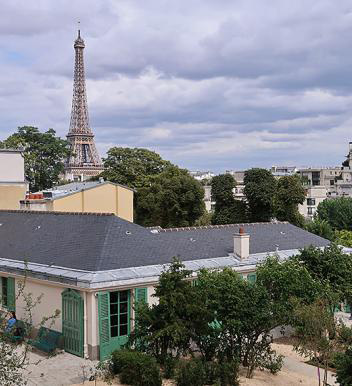
In nearby Rue Raynouard, fans of Balzac can visit Maison de Balzac, one of the authors previous homes, now a curated museum. It is in this house that the author worked on his epic study of the human condition, The Human Comedy, while wearing a monk’s robe. The museum also has Balzac’s original writing desk and chair, his turquoise-studded cane, his kettle and a coffee pot, which took pride of place on his desk.
Balzac was also a member of the raucous group referred to as the Romantics, because of their revolutionary style of writing, often scribing passionate, lively dramas against historical backdrops, causing much dissension among Paris residents. In 1830, the Romantic movement gained much notoriety following the appearance of the play Hernani at the theatre Comedie Francaise. The play’s writer, a contemporary of Balzac, was relatively unknown at the time, although that was soon to change dramatically. Victor Hugo’s play was very well received by one side of Paris society, lauding it with an enthusiastic reception, while others were highly offended, imploring Hugo directly to “withdraw your filthy play”. La Comedie Francaise was founded in 1680 and is the oldest active theatre company in the world.
The exuberant reception of Hernani firmly established Hugo as the leader of the Romantic movement and provided a firm fan base for his novel, published the following year; The Hunchback of Notre Dame. Hugo took a similar approach to writing his novels as he did his plays, in that he liked to blend fictional characters and their foibles with historic figures and settings. A novel approach for its time, it simultaneously excited and horrified readers, but it did not deter Hugo who wished to write for the ordinary people of France, and display Paris as a city of many layers, once writing that
“…In the depths of Paris…nothing is more fantastic. Nothing is more tragic. Nothing is more sublime”.
In many ways, in this novel, Hugo provides us with a view of “old Paris”, set as it is, against a vividly rendered backdrop of 15th century Paris. Many of the landmarks mentioned in The Hunchback of Notre Dame are still familiar to modern day visitors to the city, albeit in the context of an overall changed landscape. First and foremost, there is the glorious Cathedral Notre-Dame de Paris, one of the City of Light’s most splendid landmarks and the backdrop to which the novel’s characters play out their destiny. Following the extensive fire to this building in 2019, considerable renovations and reconstruction of the main building, towers and spire have taken place, with re-opening expected in late 2024/25.
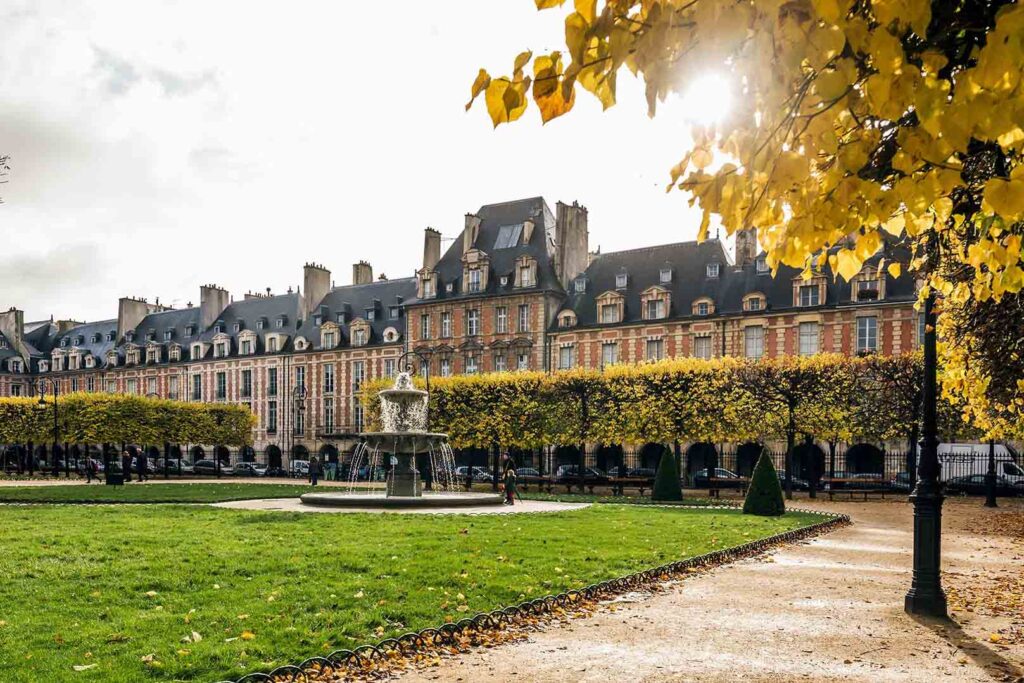
Within the novel, the narrator (Hugo), describes the view from the top of the Cathedral tower, and mentions other landmarks with personal significance to the author, which are still possible to visit and explore today. These include “the sharp spire” of the Cathedral Saint-Sulpice (6th arrondissement) where Hugo was married in 1822 and the Place Royale (now the Place des Vosges) where Hugo and his wife, Adele Fouche, later lived with their four children. During this time, Hugo also enjoyed opening his home as a place for general discussion and debate among other luminaries; writers, artists and politicians of the time, including Charles Dickens, Alexandre Dumas, Honoré Balzac and E.M. Forster.
The Hugo home at number 6 Place des Vosges is now a curated museum, known as Maison de Victor Hugo. Within, visitors will revel in exploring many artefacts from various parts of Hugo’s life, including his childhood, his “Romantic movement” days, his exile in Guernsey, as well as his last days in Paris before he died.
In 1862, Hugo’s other literary phenomenon, Les Miserables, was published to huge international acclaim. Renowned as one of the longest novels ever written, it was eventually published (he began writing it in 1845) following his return to Paris from exile in Guernsey, having been labelled an outspoken political critic of Napoleon III. Set in the mid 19th century, it illustrates to the reader a city that is brimming with tension, discontent and disillusionment. We see the city through the eyes of Jean Valjean, and experience the outbreak and aftermath of the 1832 Uprising, which occurred in central and eastern Paris.
There are many key landmarks from the novel that can be visited today, some of which still provide a real insight into this old medieval Paris. In particular, the area known as the Marais – the marsh – where there are more intact medieval buildings than anywhere else in the city. It is in the Marais that you can find the Church of Saint Paul-Saint Louis, where Marius and Cosette are married. Number 6, Place des Vosges (Hugo’s residence and now museum) is also in the Marais. This area is on the right bank of the Seine and, for reasons unknown, escaped the Hausmann urban modernisation process that most of Paris endured.
Further west is the Latin Quarter and another area that still retains some of its medieval character and structures. Places of interest here include The Sorbonne, a place of intellectual reasoning, and nearby is the Jardin du Luxembourg, the second largest park in Paris and the place where Marius and Cosette first encounter each other. Also worth looking out for in the jardin is the sculpture called “Le Marchand de Masques“, which depicts a boy selling masks of famous people, with the mask in his hand being that of Victor Hugo.
The reputation and significance of Hugo as a national literary paragon was demonstrated on the occasion of his 80th birthday when over half a million people filed past his home on Avenue d’Eylau. Subsequently, this road has been renamed Avenue Victor Hugo, which lies close to Place Victor Hugo (both 16th arrondissement), complete with giant fountain! Although Hugo’s last home was located on (what is now) Avenue Victor Hugo, the original building no longer exists. Instead, a private building carries an etching of Hugo’s face on one of its walls.
Paris Shines A Light
Today, the once-thundering cries of revolution have softened and life is a lot quieter on the boulevards. Looking around, I find it is the clink of café cups and the chic elegance of Parisians that is more evident. Following the Romantic era of Hugo, Balzac and others, the literary spotlight shifted once again in the early 20th century, introducing two separate waves of remarkable expatriate writers. These literary trailblazers, known as the Lost Generation and the Beat Generation, left indelible marks on Paris, each embodying the spirit of their time with a unique voice and a restless quest for meaning.
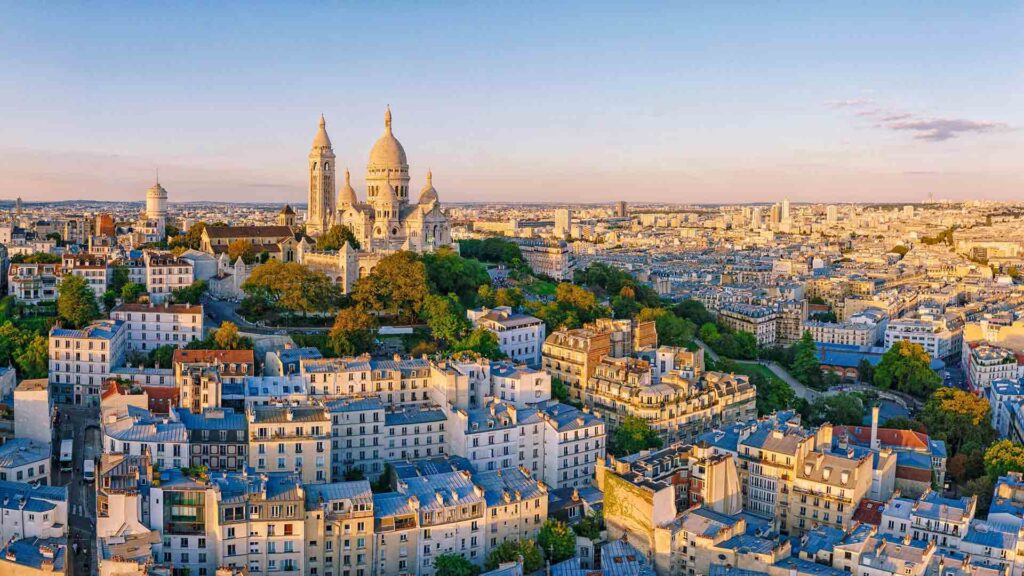
At the beginning of the 20th century, the “village” of Montparnasse was the centre of literary and artistic Paris. Nowadays, the winding streets here and in nearby Montmartre are teeming with tourists, but in the early 1900’s, the literary troupe such as Proust and Apollinaire lived and worked undisturbed in this quartier, perched high above the city. In 1904, James Joyce arrived in Montparnasse from his native Dublin, so that he could examine the Irish experience with some distance. His first attempt at this was his collection of short stories, Dubliners. Later, his international phenomenon Ulysses was first published by Sylvia Beach at her one-book publishing house “Shakespeare and Company” at Rue de l’Odeon.
In the years between the two World Wars, Paris attracted political and cultural exiles fleeing the injustice and intolerance of their own homelands, offering them comparative liberal safety and allowing them artistic freedom. It was during this period that Montparnasse knew its heyday. The Génération Perdue (Lost Generation), as Gertrude Stein named them, included writers like Ernest Hemingway, Ezra Pound, F. Scott Fitzgerald, T.S. Eliot, and Samuel Beckett. They gathered in cafés and hung about Stein’s apartment to share ideas, bottles of wine and write, together forming a movement that still resonates strongly today. The cafe’s Le Dome, Le Select, La Rotonde and La Coupole buzzed with the industry of the Lost Generation group until the approach of Hitler’s troops forced then to leave their refuge and retreat.
In the wake of the German occupation of Paris, the quaint, winding alleys and hidden corners nestled between Boulevard St Germain and the Seine – affectionately dubbed the Rive Gauche or Left Bank – transformed into a vibrant hub of artistic rebellion, pulsating with cultural energy and crowned as a timeless emblem of glamorous bohemia. It is believed that the French philosopher Jean-Paul Sartre led this move as, prior to the war, he travelled to Le Dome in Montparnasse to write, but when the war made travelling difficult, he preferred to stay where he lived in St Germain des Pres. He chose, with his friend Simone de Beauvoir, to use Café de Flore as a place to meet, debate and write.
They were soon joined by others. As the echoes of Hemingway and Fitzgerald faded, the voices of James Baldwin, Irwin Shaw, and James Jones surged forth to fill the creative void, breathing new life into the literary scene. Meanwhile, the audacious Olympia Press, helmed by the enigmatic Maurice Girodias, dared to release Vladimir Nabokov’s provocative masterpiece, Lolita stirring both admiration and controversy.
Amidst this cultural renaissance, a plethora of highlights await the curious wanderer of St Germain – the very walls where Picasso poured his soul into the monumental canvas of Guernica and the soulful basement jazz clubs hidden along Rue Buci where members of The Beat Generation hung out. This was a literary subculture movement started by a group of expatriate authors whose work explored and influenced American culture and politics in the post-World War II era, including Alan Ginsberg and Jack Kerouc.
Along the banks of the Seine are the bouquinistes, their stalls brimming with literary treasures, while the tranquil allure of Place Dauphine lingers in the shadows, a favourite haunt of the sharp-witted detective Maigret. In this intoxicating milieu, art and literature dance hand in hand, crafting an unforgettable narrative of a city alive with passion and possibility.
In a world where literary scenes and movements are becoming more international, fuelled by the boundless expanse of the internet and less centred around a physical location, Paris stands resilient. Since the beginning of this century, a number of eclectic authors such as Lee Rourke and Booker Prize nominee Tom McCarthy have established themselves in Paris. They are casually referred to as the Offbeat Generation and, as circular as life often shows itself to be, this emergent new scene is forming beside where many of their predecessors have found their final resting place – the Père-Lachaise Cemetery. It is behind these gates that you can find the graves of such literary icons as Gertrude Stein and Oscar Wilde, whose spirits undoubtedly watch over this new wave of writers as they challenge the status quo, breathing fresh life into the world of letters.
A Literary Map of Paris
Where to Eat
If you’re on a quest to savour the perfect blend of delectable bites and literary magic, why not try some of these enchanting Parisian cafes and restaurants that pay tribute to your favourite authors?
Le Procope
Located at 13 rue de l’Ancienne-Comedie, 6th Arrondissement, this eatery opened in 1686 during the reign of Louis XIV. It is one of the oldest dining places in the world and is believed to have introduced coffee to Parisians.
Notable guests included Voltaire (whose writing desk is on display), Honoré Balzac, Victor Hugo, Jean-Jacques Rousseau and Oscar Wilde.
Cafe de la Paix
Located at 5 Place de l’Opera, 9th Arrondissement, this café was a definite favourite of the cast of Irish authors that proliferated in Paris in the early 20th century. The gold-bedecked dining room was a particular favourite, at different times, of Oscar Wilde, Samuel Beckett and James Joyce who often ate here with Sylvia Beach (owner of Shakespeare and Company bookshop and publisher).
La Rotonde
Located at 105 Boulevard du Montparnasse, 14th Arrondissement, this was a regular favourite of Ernest Hemingway and his wife, as they lived nearby. Simone de Beauvoir was born above La Rotonde and later used it as an office while she edited Jean-Paul Sartre’s works. Ian Fleming used this café as a key location for his James Bond character where he liked to dine and people-watch.
Le Dome
Located at 108 Boulevard du Montparnasse, this cafe and its neighbour, La Rotonde (above), were visited interchangeably by many of the visiting authors. Other American writers followed, including F. Scott Fitzgerald, Ezra Pound and Jack Kerouc.
Café de Flore
Located at 172 Boulevard St. Germain, 6th Arrondissement, it opened its doors in 1887 and immediately attracted writers such as Simone de Beauvoir, Jean-Paul Sartre and Albert Camus, as a place to work during the Nazi occupation, where a large woodfire provided welcome relief from the Parisian winters at a time that heating at home was not always possible.
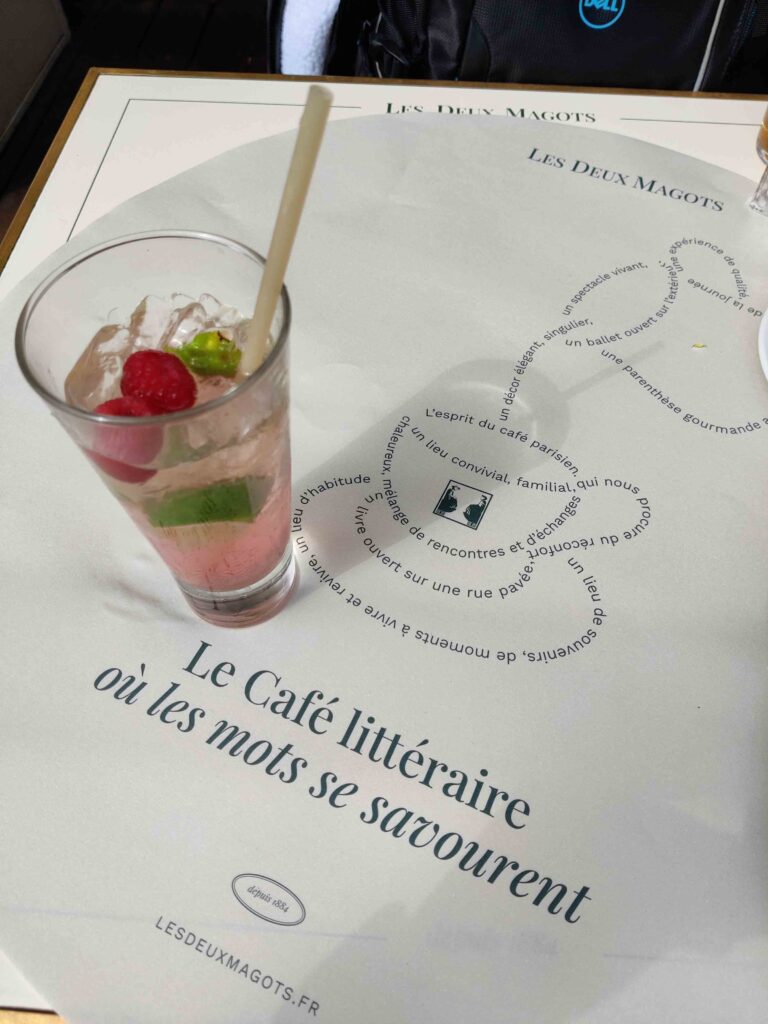
Les Deux Magots
Located at 6 Place St. Germain-des-Pres, 6th Arrondissement, this is possibly one of the more famous and popular of the “literary cafes” in Paris. Starting life as a drapery before becoming a wine merchant and eventually a café, Les Deux Magots was frequently visited by Oscar Wilde, Ernest Hemingway and James Joyce.
Where to Drink
If you’re in the mood for a delightful drink, why not indulge in a tipple at one of these charming Parisian bars where your favourite author once frequented? Embrace the literary vibe and sip where the stories flowed!
Bar Hemingway
Channelling your inner literary legend might not be the wisest choice – after all, those iconic figures from the 20th century were known to indulge in libations that would make even the heartiest drinkers wince! However, there’s no reason you can’t raise a glass or two in some of their cherished haunts. Picture this: the elegant Bar Hemingway nestled within the opulent Ritz hotel, a place steeped in history where the likes of Ernest Hemingway himself would share spirited debates with none other than F. Scott Fitzgerald back in the Roaring Twenties. Cheers to savouring the ambiance, if not the excess!
Le Rosebud
Just around the corner lies Le Rosebud, an enchanting hideaway that whispers the tales of its bygone patrons, Jean-Paul Sartre and Marguerite Duras. Here, the air is alive with the smooth rhythms of vintage jazz, and the barstools are still occupied by the dreamers and scribes of today – writers and journalists crafting their own narratives amidst the echoes of history.
Where to Sleep
After a long day of meandering through the enchanting streets of Paris, where can you lay your weary head to rest? Why not immerse yourself in the charm of a hotel that once welcomed the great literary legends, where stories linger?
L’Hotel
Nestled at 13 rue des Beaux Arts, L’Hotel once wore the guise of a shabby refuge, a far cry from its current polished charm. It was here that the legendary Irish playwright Oscar Wilde sought solace in his final days, haunted by the shadows of his past after enduring the harsh reality of imprisonment for “gross indecency” and the bitter taste of exile. It was within these very walls that Wilde drew his last breath, famously quipping, “This wallpaper and I are fighting a duel to the death. Either it goes or I do.” Fast forward a century, and the hotel has undergone a remarkable transformation, shedding its former frays. If you happen to find Wilde’s room unoccupied, step inside and immerse yourself in the remnants of his extraordinary life – gaze upon his letters, the infamous unpaid hotel bill, and even his weathered umbrella, which all whisper tales of the brilliant mind that once roamed these halls.
Chateau Saint James
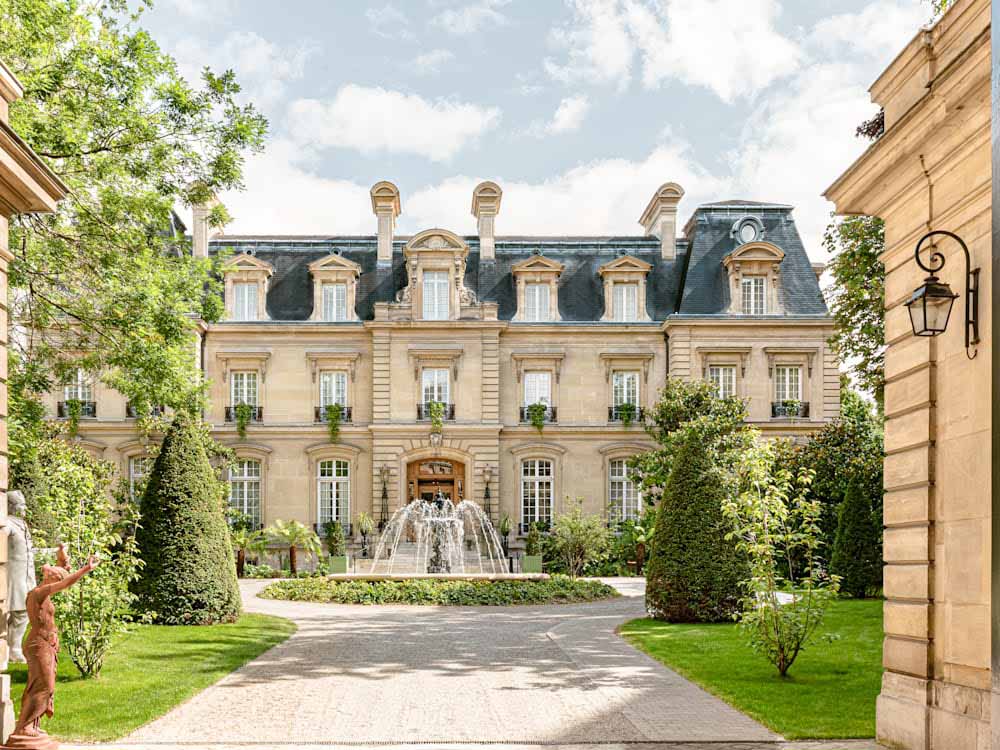
Nestled in the verdant embrace of the charming 16th arrondissement, the extraordinary Château Saint James has gracefully transitioned from a grand residence to a luxurious hotel. Once the distinguished home of Louis Adolphe Thiers, a 19th-century president, this Neoclassical gem now welcomes guests into its 22 opulent rooms and a serene spa oasis. Treat your taste buds at the Michelin-starred Bellefeuille restaurant, masterfully orchestrated by the talented chef Julien Dumas. And as you wander through the hotel’s elegant halls, you may feel the lingering presence of Honoré de Balzac, the legendary author of *La Comédie Humaine*, who once roamed these streets, steeping the air in literary charm.
Hotel Monte Cristo
Aesthetically inspired by Alexandre Dumas’ tale of revenge and retribution, The Count of Monte Cristo, the eponymously named hotel takes on the design characteristics of an exotic adventure story. Located on a quiet street in the 5th arrondissement, the surrounding neighbourhood feels refreshingly tranquil in contrast to the congested touristy areas of Rive Droit. Upon entry, hotel visitors are greeted by a glass vitrine of stuffed rare birds and shelves of heavy leather-bound books, as well as a vintage photograph of the author himself – as if he is overseeing the management of the hotel himself (with an air of mischief). As the name suggests, the Rum Bar serves bespoke rum-based cocktails with a twist of tropical flavours (order the banana Old Fashioned).
Bookstores
Shakespeare and Company
Nestled on the storied Left Bank, this cherished English-language bookstore has been a beacon for literary souls since its inception in 1951, thanks to the visionary American George Whitman. Inspired by a legendary refuge for expatriate writers in the roaring 1920s, Whitman’s haven blossomed into a vibrant hub for the Beat Generation, drawing writers like Allen Ginsberg and William S. Burroughs, alongside iconic figures such as Henry Miller and Richard Wright, who found inspiration in its cosy corners. Today, under the warm stewardship of Whitman’s daughter, Sylvia, Shakespeare and Company continues to enchant bibliophiles, offering a delightful array of new and used books while providing a sanctuary for contemporary writers to craft their masterpieces and find respite amid the whispers of literary history.
Bouquinistes along the Seine
Strolling along the enchanting shores of the Seine, you’ll encounter charming green boxes lined up like storytellers waiting to share their tales. Each box brims with a treasure trove of second-hand books, whimsical artwork, nostalgic memorabilia, and delightful souvenirs. These riverside stalls are more than just a feast for the eyes – they are a testament to Paris’s rich literary heritage, steeped in history and tradition. Vendors carefully adhere to a tapestry of regulations, ensuring their vibrant displays remain in harmony with the city’s rhythm, opening their doors to the world only from sunrise to sunset, as if to guard the magic within until day breaks anew.
Let Them Eat Cake!
Parisian Literary Tour & Pastry Tasting in the 16th Arrondissement with local Patricia Elig. A fabulously entertaining tour that combines learning about the famous authors who called Paris home, with the history of French patisseries.