
Bram Stoker’s Dublin

Written by Niamh Martin
Abraham Stoker was a writer from Dublin, better known to the world by his pen name, Bram Stoker. He wrote thirteen novels, three short story collections, twelve uncollected stories and four works of non-fiction. However, the work he is undoubtedly most famous for is his Gothic horror novel “Dracula”.
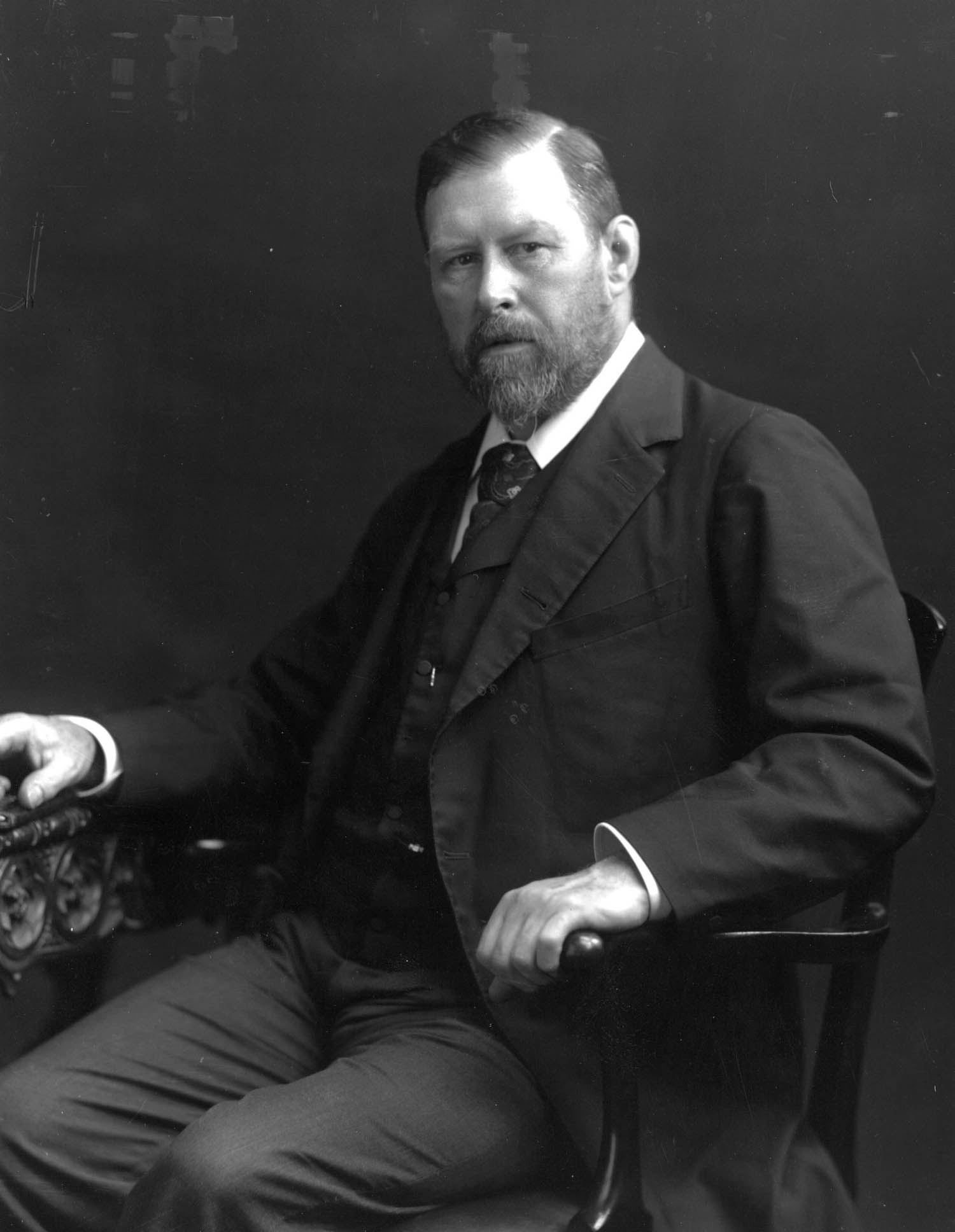
Table of Contents
Early Life
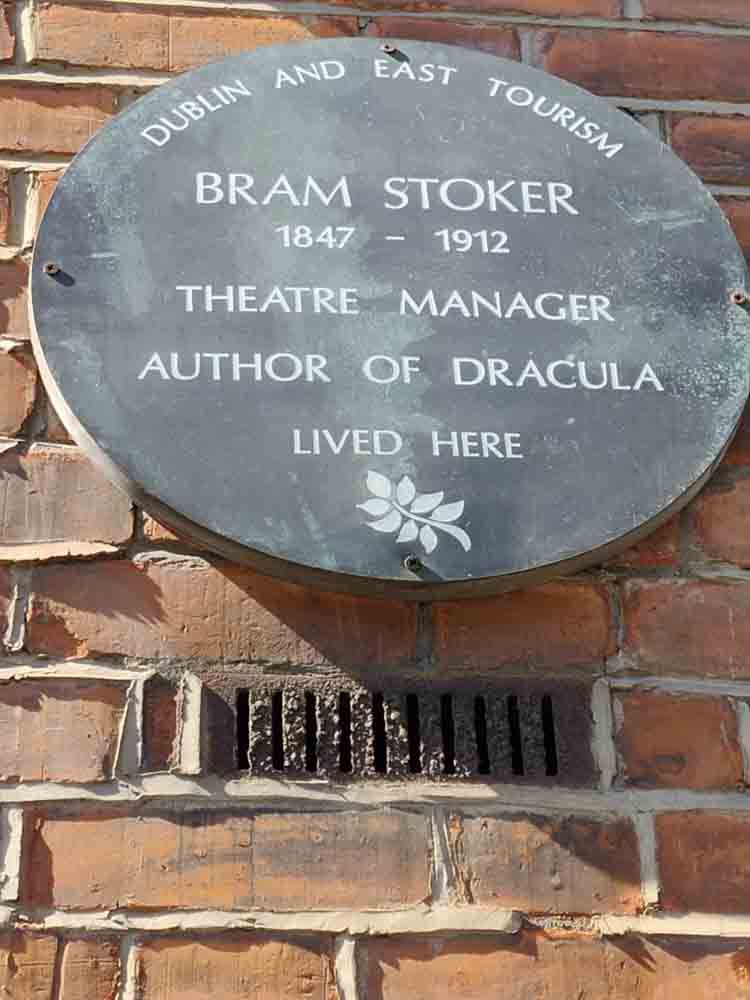
Bram Stoker was born on November 8th 1847 at 15 Marino Crescent, Clontarf, Dublin. He was named after his father, Abraham Stoker, who along with his wife Charlotte Thornley, had seven children, of which Bram was the third eldest.
Due to an undefined illness, Bram Stoker was bedridden until the age of seven. Despite this, it is known that Stoker became a talented and skilful athlete and footballer during his time at Trinity College Dublin (1864-70), where he graduated with a degree in Mathematics.
While at Trinity College, he also distinguished himself by holding the two positions of “President” and “Auditor” of the University Historical Society, remaining the only student to have done so to date.
Career
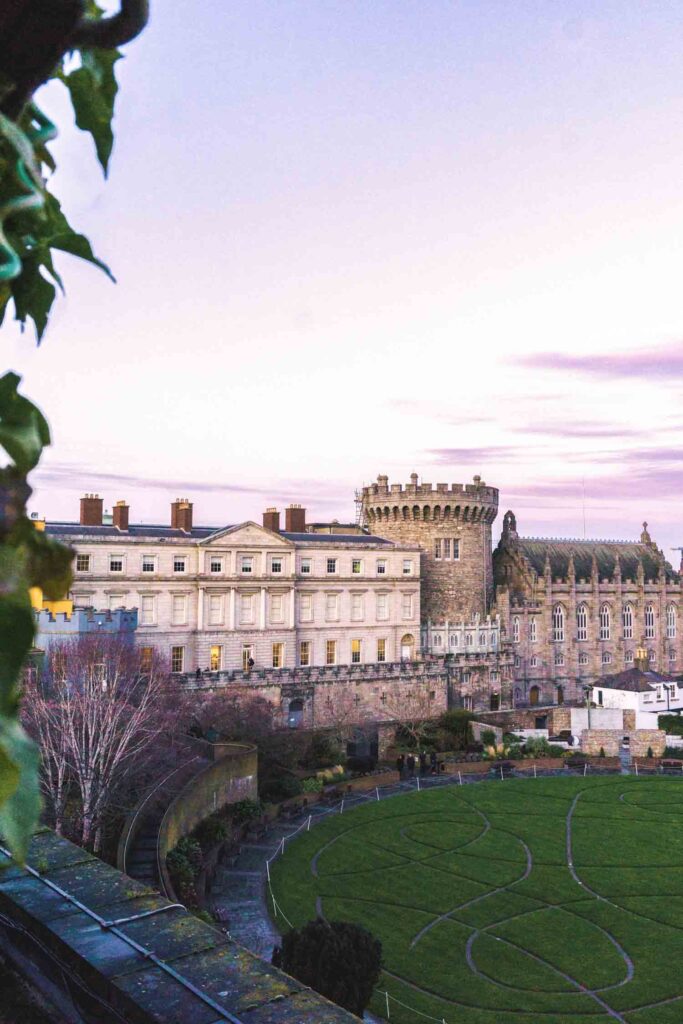
Following graduation from Trinity College, Stoker worked at Dublin Castle as a civil servant for 10 years. He had followed in the footsteps of his father, later surpassing him by becoming Inspector of Petty Sessions. In this position, he oversaw the magistrates’ courts that tried all cases down to the most minor crimes, the surviving records of which provide valuable insight into the minutiae of Irish life at the time. While working at Dublin Castle, he lived at 30 Kildare Street, in the highly fashionable and affluent Georgian area of Dublin.
Bram Stoker was a contemporary of Oscar Wilde and was a frequent visitor to his family home at Merrion Square, where Oscar’s mother, Lady Jane Wilde (aka the poet Speranza) hosted regular gatherings of approximately 40 people from the higher echelons of Dublin society. These meetings acted as forums for wide discussion of politics and social change during this time.
During this time, he was also an unpaid journalist and drama critic for the Dublin Evening Mail. After writing a favourable review of Henry Irving’s production of Hamlet at the Theatre Royal in Dublin (no longer standing), Stoker met Irving at The Shelbourne Hotel and immediately struck up a friendship which resulted in Bram Stoker moving to London and becoming the business manager of Irving’s Lyceum Theatre.
Stoker’s association with Irving would also open the door into London high society for him. This resulted in Stoker rubbing shoulders with other notable literary names, such as Sir Arthur Conan Doyle.
Family
In 1878, the same year he moved to London, Bram Stoker married his earlier neighbour Florence Balcombe, daughter of Lieutenant-Colonel James Balcombe of 1 Marino Crescent, Dublin. The following year, the couple’s only child, Irving Noel Thornley Stoker, was born.
Death
Bram Stoker died in London in 1912, of unknown causes, though it was suspected to have been related to tuberculosis or possibly syphilis. He was cremated and his ashes are in a display urn at Golders Green Crematorium, London.
Dracula’s Dublin Influences
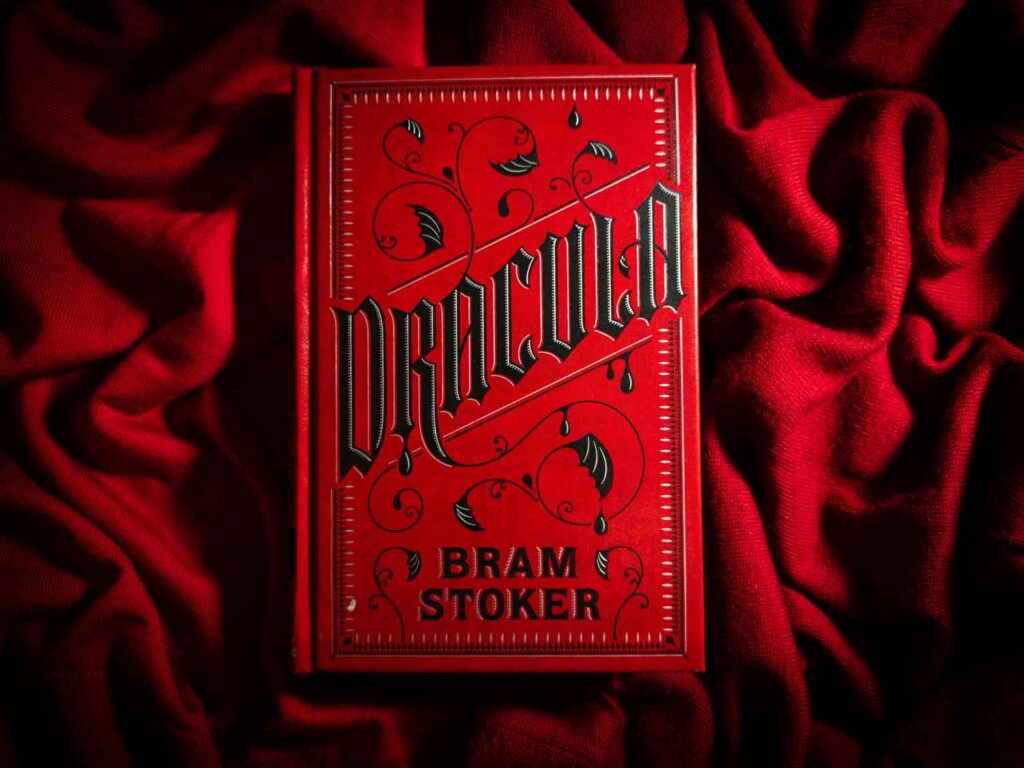
Stoker is most famously known for his gothic novel Dracula, published in 1897.
It has become one of the most noteworthy fiction books ever written, forever elevating the world of vampires into popular culture.
But why was Stoker compelled to pen this Gothic masterpiece? What were his early influences and how did he undertake the research for his epic novel?
Who knows for sure, but there are certain things that we do know Bram Stoker was exposed to during his life that are likely to have left a long-term impression on him, and potentially provided some raw material for this legendary piece of literature.
- Stoker was confined to bed due to illness until he was seven years old. During this time, his mother would tell him stories drawn from her experiences of growing up with the cholera epidemic in the north-west of Ireland. Many of these stories involved the living being mistaken for the dead, a key theme in the Dracula novel.
- Born in 1847, as a famine survivor, Stoker no doubt heard stories of the starving masses – the walking dead – making their way through the streets and roads of Ireland. The original title of Stoker’s Dracula manuscript was in fact titled, “The Undead”.
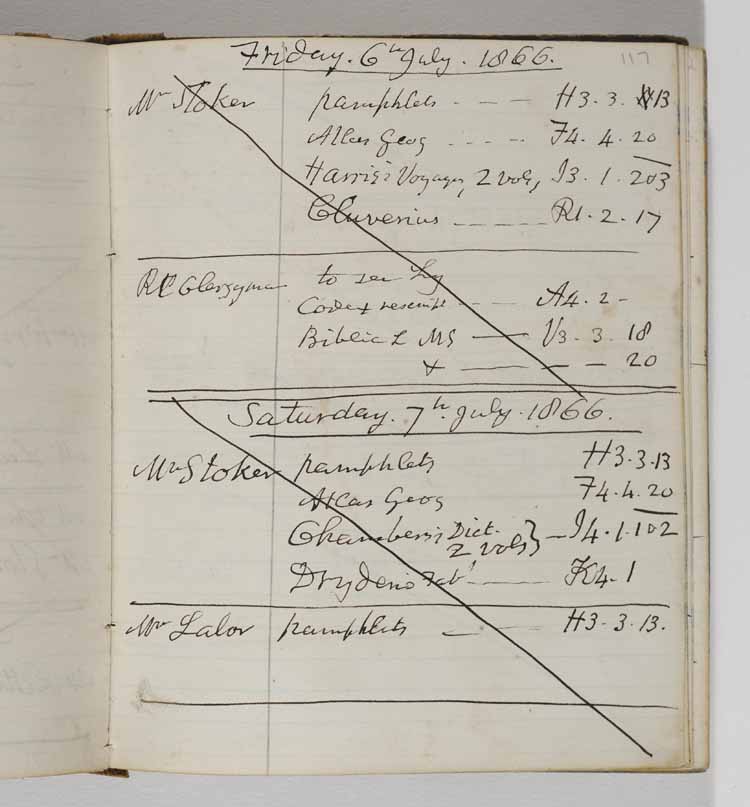
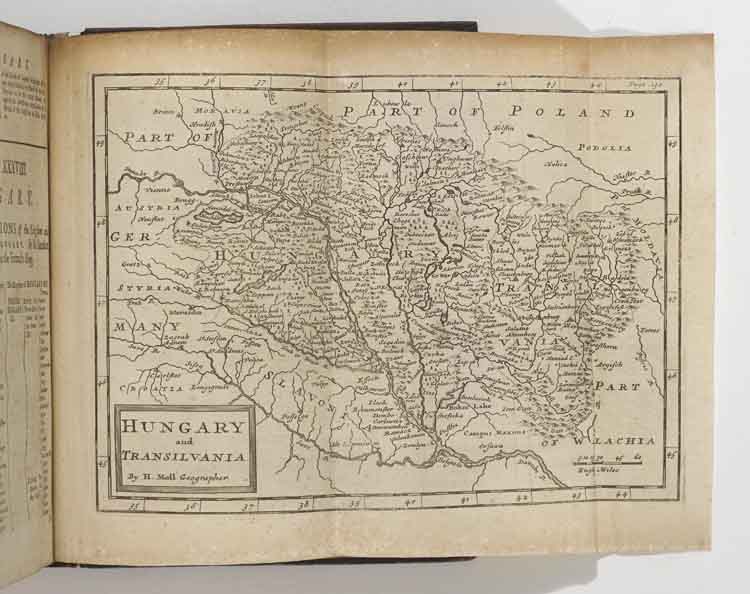
- Bram researched the folklore of 13 countries that had some version of a creature rising from the dead to prey on the living. He is known to have visited Marsh’s library in Dublin as a teenager in 1886-7. The register at the library details that Stoker consulted books that referenced Transylvania and the historical figure of Dracula.
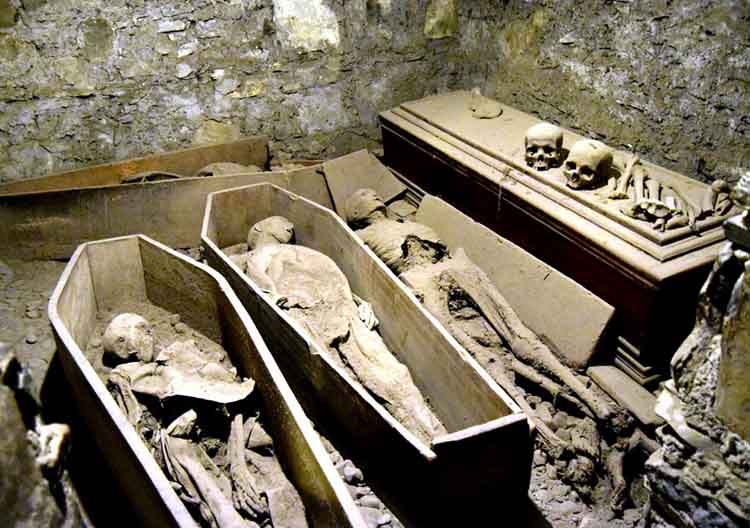
- While Stoker worked at Dublin Castle, he is known to have visited the crypts of St. Michan’s church nearby. These burial vaults contain the exposed but preserved mummified remains of many of Dublin’s most influential families of 17th-19th century.
Bram Stoker’s Literary Trail of Dublin
Where Bram Stoker lived
15 Marino Crescent, Clontarf, Dublin 3 – Bram Stoker’s birthplace. Considered a new suburb of Dublin, Bram’s parents moved to these new four-storey Georgian style houses in 1845.
30 Kildare Street, Dublin 2 – Stoker’s home while he worked at Dublin Castle.
7 St. Stephen’s Green, Dublin 2 – Stoker lived here in 1877, the year before he moved to London.
Where Bram Stoker studied
Trinity College Dublin, Dublin 2 – Stoker studied Mathematics here from 1864-70 and was also considered a highly regarded public speaker, athlete and football player while at Trinity. Visit the Long Hall in the Old Library to see where Stoker studied.
Where Bram Stoker worked
Dublin Castle for 10 years as a civil servant, specifically as Inspector of Petty Sessions.
He was also an unpaid journalist at the Dublin Evening Mail (offices were situated on the corner of Parliament Street and Lord Edward Street, Dublin 2).
Other key Bram Stoker Dublin literary places of interest
Shelbourne Hotel, Dublin 2 – where he met theatre producer Henry Irving and the beginning of his eventual move to London was hatched.
1 Merrion Square, Dublin 2 – Oscar Wilde’s home. Bram Stoker was a very close friend with Willie Wilde (Oscar’s brother). He also regularly attended society debates and discussions hosted by Lady Jane Wilde (i.e. the poet Sperenza).
St. Michan’s Church, Church Street, Dublin 7 – Where Stoker went to visit the exposed mummified remains of Dublin’s aristocrat families.
Marsh’s Library, St. Patrick’s Close, Dublin 8 – where Stoker went to research books about Transylvania and the historical figure of Dracula when he was a teenager.
St. Ann’s Church, Dawson Street, Dublin 2 – The church where Bram Stoker and Florence Balcombe married in 1878.
Bram Stoker’s Bibliography
Novels
- Primrose Path – A moralistic tale about the evils of drinking, told over ten chapters (1875).
- The Snake’s Pass – An eighteen chapter romantic adventure story. It tells the tale of an Englishman who falls in love while on holiday in west Ireland (1890).
- The Watter’s Mou’ – Another romantic adventure, with a protagonist in the coast guard. He finds himself duty-bound to stop his girlfriend’s father from smuggling on the eastern coast of Scotland (1895).
- The Shoulder of Shasta – A romance story about a woman from San Francisco who falls in love with a mountaineer she meets in Northern California (1895).
- Dracula – Gothic horror novel (1897)
- Miss Betty – A historical romance set in Georgian era England (1898).
- The Mystery of the Sea – An adventure romance with supernatural elements (1902).
- The Jewel of Seven Stars – A horror story about an attempt to resurrect an Egyptian queen (1903).
- The Man – A romance story set in England and Scotland (1905).
- Lady Athlyne – A romance story set in America and Europe (1908).
- The Lady of the Shroud – An adventure story about a young man who inherits a large amount of money (1909).
- The Lair of the White Worm – A horror story about a giant white worm which can transform itself into a woman (1911).
Short Story Collections
- Under the Sunset (1881)
- Snowbound (1908)
- Dracula’s Guest (1914) – Published posthumously
Individual Stories
- The Crystal Cup (1872)
- Buried Treasures (1875)
- Our New House (1885)
- Old Hoggen: A Mystery (1893)
- The Man from Shorrox (1894)
- Bengal Roses (1898)
- A Young Widow (1899)
- Lucky Escapes of Sir Henry Irving (1900)
- To the Rescue (1908)
- The ‘Eroes of the Thames (1908)
- The Way of Peace (1909)
- Greater Love (1914) – Published Posthumously
Non-Fiction
- The Duties of Clerks of Petty Sessions in Ireland (1879)
- A Glimpse of America (1886)
- Personal Reminiscences of Sir Henry Irving (1906)
- Famous Imposters (1910)
Some Stoker Facts
Bram Stoker and Oscar Wilde were students at Trinity College, Dublin, at the same time. Stoker was very good friend’s with Oscar’s brother, Willie.
Oscar Wilde was engaged to his childhood sweetheart, Florence Balcombe. However, she chose to marry Bram Stoker.
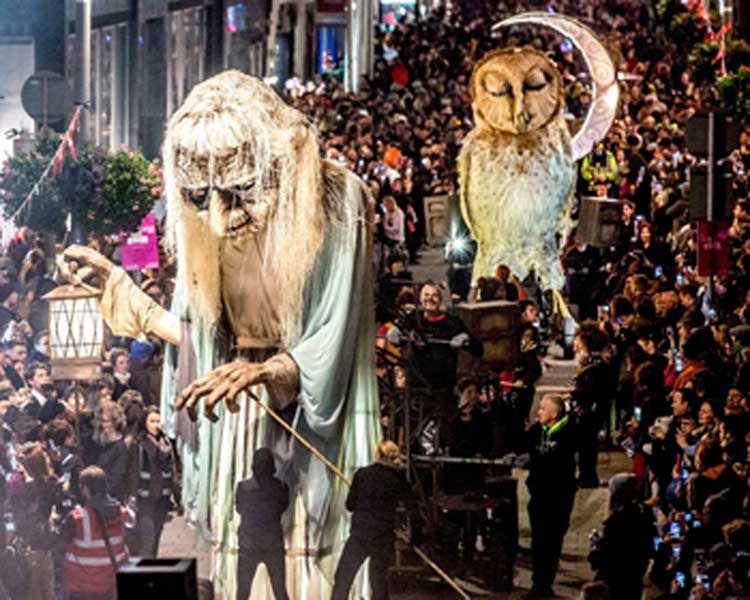
There is an annual Bram Stoker Festival held in Dublin, in October.
Things To Do
Visit St. Michan’s Church to see the mummified remains of 17th, 18th and 19th century Dubliners! €15 for a 2 hour tour.
Marsh’s Library to see where Bram Stoker read about Transylvania and vampires. The library has not changed since the 18th century.
Don't Miss
The annual Bram Stoker Festival held over 3 days every October in Dublin.