Nottingham’s Literary Attractions

Written by Niamh Martin
Designated UNESCO City of Literature in 2015.
Nottingham is a city with a reputation for nurturing creativity in all forms. There is a distinct literary heritage that draws on the city’s rebellious history, as well as an ongoing commitment to encouraging emerging writers from diverse genres – poets, scriptwriters, playwrights and authors – providing opportunities to thrive, in this lyrical, bookish city.
Legacy
Nottingham prides itself on its rebellious reputation, both in the historical sense through the English Civil War and the riotous actions of the Luddites, as well as in the more romantic trailblazing sense of its many artists and pioneers, including Lord Byron, DH Lawrence, Ada Lovelace and Mary and Richard Howitt.
In his novel “Women in Love”, DH Lawrence declares that “Every true artist is the salvation of every other” – believing that a community rich in artists creates a strong culture and environment to build a platform upon which more talent can develop.
In Nottingham, the form of art which dominates is writing, and in contemporary times, a thriving poetry scene is evident and growing.
For visitors to Nottingham, there is an intriguing blend of old and new literary attractions to visit and enjoy, from historical lodgings to poetry corners, as well as a range of literary festivals to savour and participate in.
Whatever your reason for visiting Nottingham, here are seven literary attractions not to be missed!
Table of Contents
Nottingham’s Libraries
There are 18 public libraries across Nottingham City, promoting literacy and writing across genres and languages to reflect the cultural diversity within the city. Local reading and writing groups host sessions and, for aspiring poets, the more established DIY Poets and Nottingham Poetry Society also contribute to the public library scene.
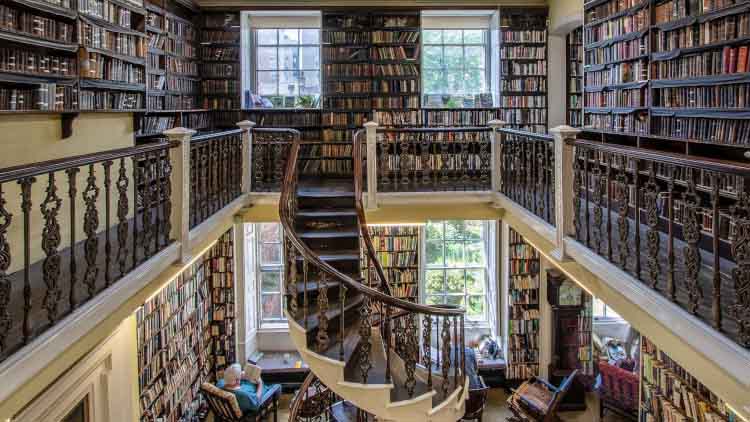
- Bromley House Library – Established in 1816 and known originally as Nottingham Subscription Library, this library moved from Carlton Street to Bromley House in 1821. It was one of the first subscription libraries (prior to the establishment of public libraries), with membership gained through the purchase of a share. This was capped at 265 households. Bromley House Library today, remains a membership library with an annual subscription. Membership provides access to over 50,000 books dating from 1575 to the present day, including works by historical writers, debut novelists, local and international authors. It is also the initial home of Nottingham’s Natural History Society, the site of Nottingham’s meridian line (which still survives to this day) and the home of the first photographic studio in the Midlands in 1841. The building retains many of its original features, of particular note is the beautiful spiral staircase and gallery in the largest reading room. History tours of the building are available with advance booking. See the library website for details.
- Nottingham Women’s Library – Located on the top floor of the Nottingham Women’s Centre, the library is open for any woman to browse during the Centre opening hours, or to sit a read a book. Borrowing a book requires membership (which is easily arranged in person or online). The collection hosts a wide range of books, magazines, and articles by female authors, including rare feminist literature from the 70s & 80s.
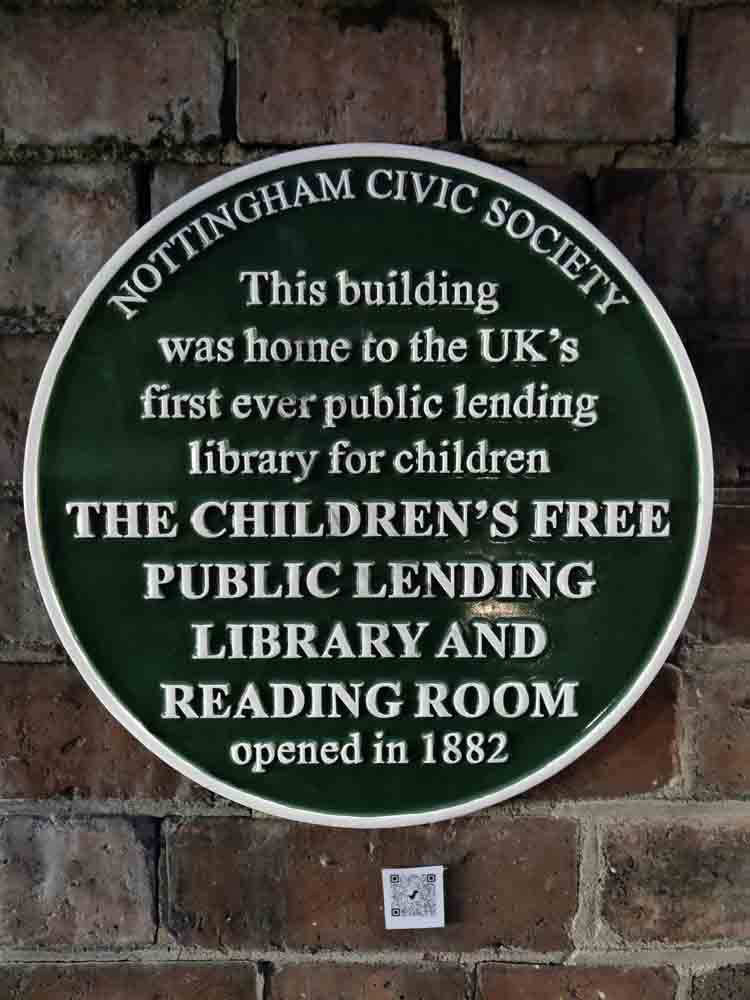
- Children’s Free Public Lending Library and Reading Room – This library was created in 1882 with a £500 grant from the Nottingham woollen manufacturer and Liberal MP Samuel Morley. Believing in the significant benefits of early literacy, Morley founded the children’s library because Nottingham’s Central Library was only open to those aged 15 and over. The Children’s Library was housed in a building that now forms part of Bard House student accommodation on Shakespeare Street (a plaque is in situ to denote its history). The library remained open for 50 years, until its closure in 1932 and is now housed within the new Nottingham Central Library on Carrington Street.
- Nottingham Central Library – Nottingham’s flagship public library opened in November 2023 and aims to “put children, young people and learning at the heart of its design, with a high-quality children’s section, immersive storytelling room, extensive book collection and comfortable areas to sit and read”.
Nottingham’s Literary Museums
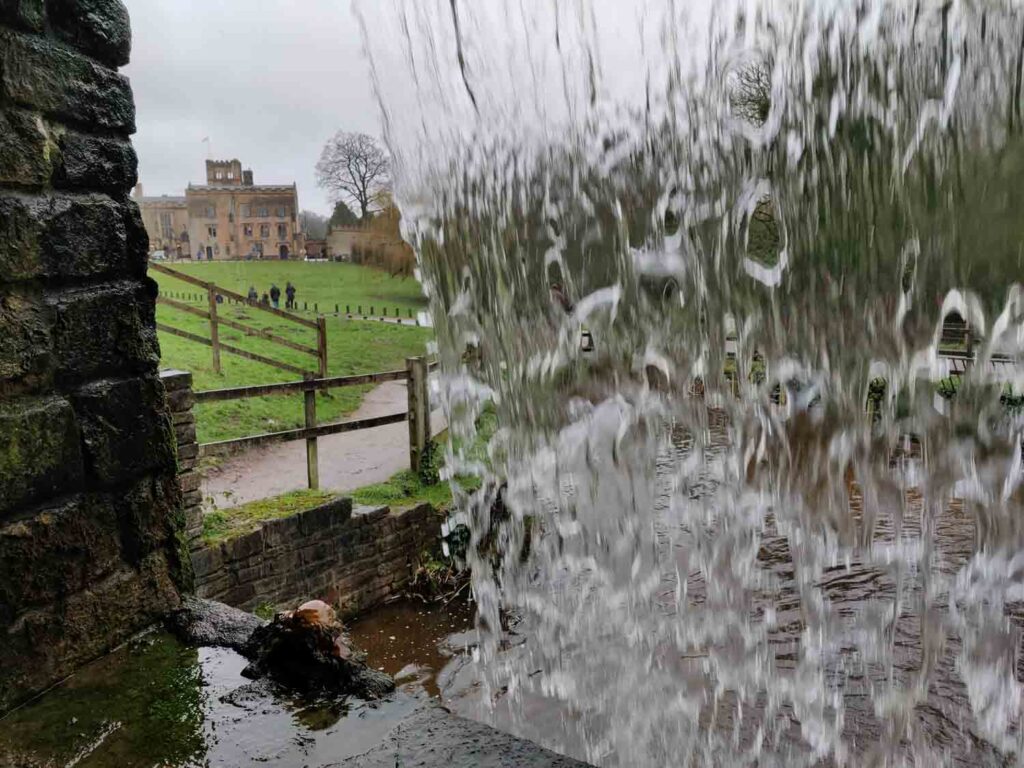
- Newstead Abbey – Best known as the ancestral home of the British Romantic Poet George Gordon, 6th Lord Byron (1788-1824), who lived here from 1808-1814. Originally, Newstead was a monastic house founded in 1163 by Henry II, with a small religious community living here until, following its dissolution, Henry VIII granted the home to Sir John Byron in 1540. Newstead retained its medieval structure and features over the centuries until the 5th Lord Byron (the poet’s uncle) let it go into significant decline as a result of his mounting debts. Newstead was virtually in ruins therefore, when the poet inherited it. He did make valiant efforts to return the buildings to their former glory, but by 1814, his personal circumstances were such that he had to put the Abbey up for sale. It was sold to his friend Thomas Wildman who spent extensively to restore the building and, today, following presentation of the house and grounds to Nottingham Corporation in 1931, it is run by Nottingham Council as a museum to Lord Byron, the poet. Reconstructed rooms include Byron’s bedroom, writing room and library. Many of Byron’s artefacts are available to view, and outside there are memorials to Byron and his loyal hound, Boatswain. On the 200th anniversary of his death, Byron 200 is a varied programme of exhibitions, events and activities at Newstead Abbey, that celebrate the sensational life and legacy of Lord Byron through the year. Guided and self-guided tours of the house and grounds are available, with details available on the website.
- D.H. Lawrence Birthplace Museum – Located 30 minutes from Nottingham city Centre, this is where Lawrence was born on 11 September 1885. Growing up in late Victorian industrial England, in the mining community of Eastwood, Lawrence surpassed all expectations of a miner’s son and went on to become one of the greatest writers of the 20th century. The Museum was founded in 1976 by local enthusiasts, it has grown to become a high quality tourist destination, owned and managed by Broxtowe Borough Council. Step back in time to experience Victorian living as Lawrence did; the wash house, the parlour – which was a room for special guests only, feel the warmth of the fire in the kitchen and have a wander around the bedrooms. The museum’s permanent exhibition features items from Lawrence’s family and even paintings created by the author himself. The museum is open to the public via guided and self-guided tours to discover the stories about Lawrence, as well as the wider local history of the area.
- Nottingham Castle – Although not strictly a literary museum, the castle hosts many items of literary interest, not least a digitally enhanced experience of the legendary Robin Hood adventures. There is plenty of entertainment for all the family here as there is an opportunity to train with Robin’s Merrie Band in the coach-arch gaming spaces and see what life was really like in a medieval town on innovative interactive gaming tables. In the Rebellion gallery, there is an opportunity to become better acquainted with three of Nottingham’s most rebellious and bloody episodes, where you’ll discover the people of Nottingham’s inherent rebel spirit – often referenced as the impetus behind Nottingham’s literary style.
Nottingham’s Literary Icons
Literary icon attractions around Nottingham can be difficult to spot, perhaps not as widely accessible or visible compared to other literary cities, but keep a keen eye out for wall plaques providing information about, predominantly, DH Lawrence, Lord Byron and Alan Sillitoe. Other treasures are also to be found though, some of which are listed below as a starter for ten! For more information, follow the “Our Rebel Writers” trail.
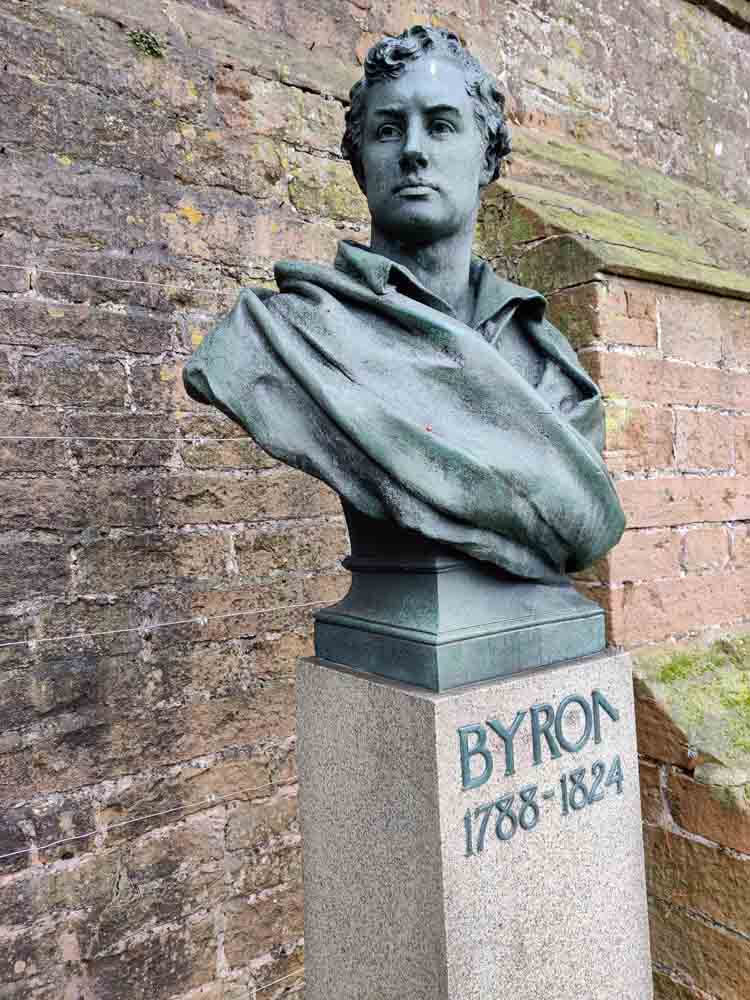
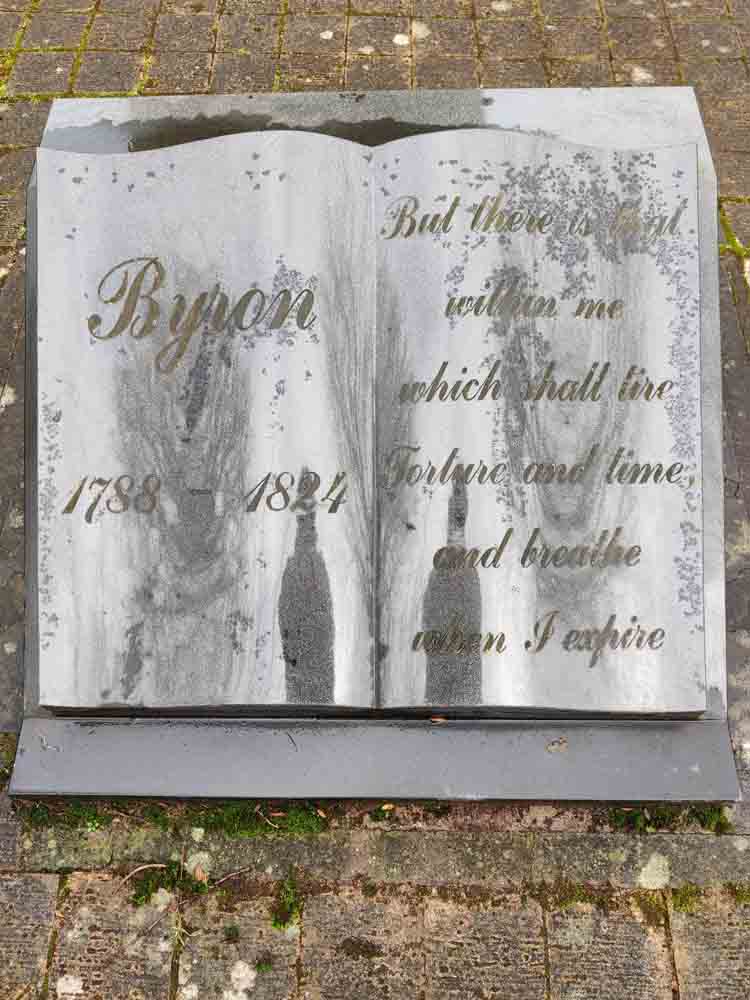
- Lord Byron – Statues of the poet are located at Newstead Abbey Gardens and Nottingham Castle. A wall plaque is located on the road previously known as Swine Green (now Pelham Green), where Lord Byron wrote his first piece of poetry in 1798, with the verse “In Nottingham County there lives at Swine Green as curst an old lady as ever was seen.….”. Further Byron plaques are located on Long Row and Brewhouse Yard. Byron’s final resting place is in St. Mary Magdelene Church, Hucknall. Approximately 20 minutes from the city centre, this church lies about 15 minutes from his earlier home at Newstead Abbey. Ada Lovelace (Byron’s daughter and visionary mathematician) is also buried here.
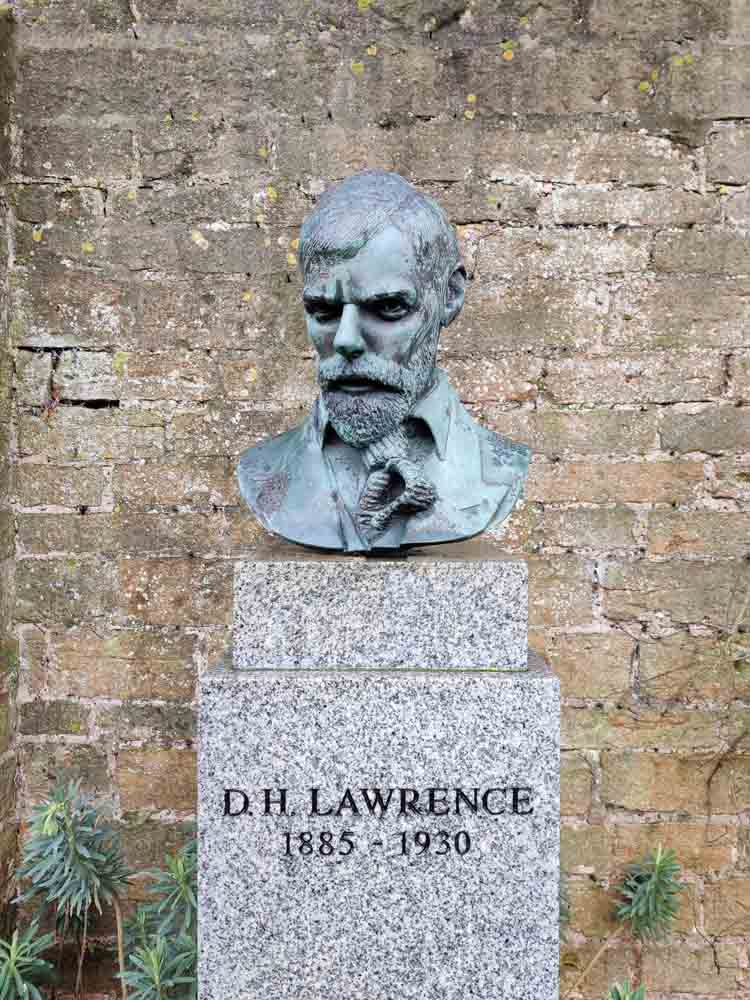
- D.H. Lawrence – Unusually, a bust of Lawrence is situated in the gardens of Newstead Abbey (there is no record of Lawrence having an association with this house). Lawrence was a student at University College Nottingham and recently, Nottingham University acquired over 600 items belonging to the author, including drafts of published works, correspondence with family members, a diary entry, personal papers and some of Lawrence’s possessions. A wall plaque of DH Lawrence is located on Long Row.
- J.M. Barrie – The Scottish author of Peter Pan lived in Nottingham for a few years, working as a journalist at the Nottingham Daily Journal. A plaque is located at this building on Pelham Street. It is said that during his time at the Nottingham Daily Journal, he took inspiration for the character of Peter Pan from a local street urchin walking along Clifton Grove in the city. He also based the setting of Nerverland on the Arboretum located nearby. His home in Nottingham was at 5 Birkland Avenue and a blue plaque is located on this building.
- Robin Hood – a bronze cast of the legendary outlaw is located outside Nottingham Castle
- Alan Sillitoe – is considered Nottingham’s most famous contemporary author. Born in 1928, he was made an Honorary Freeman of the City of Nottingham in June 2008, with the City Council Leader stating that, “Alan Sillitoe is Nottingham’s most significant author of modern times and a worthy successor to the literary giants Byron and Lawrence who came before him”. A plaque with Alan Sillitoe is located alongside Byron and Lawrence on Long Row.
Nottingham’s Literary Pubs
Perhaps not as well known for its literary pub life as other literary cities, there are nevertheless some lovely pubs with notable literary association that are worth a visit with a good book under arm.
- The Peacock Pub – Known to have been a favourite of D.H. Lawrence (a portrait of him hangs in the lounge) and also J.M. Barrie, located just a 5 minute walk from his home.
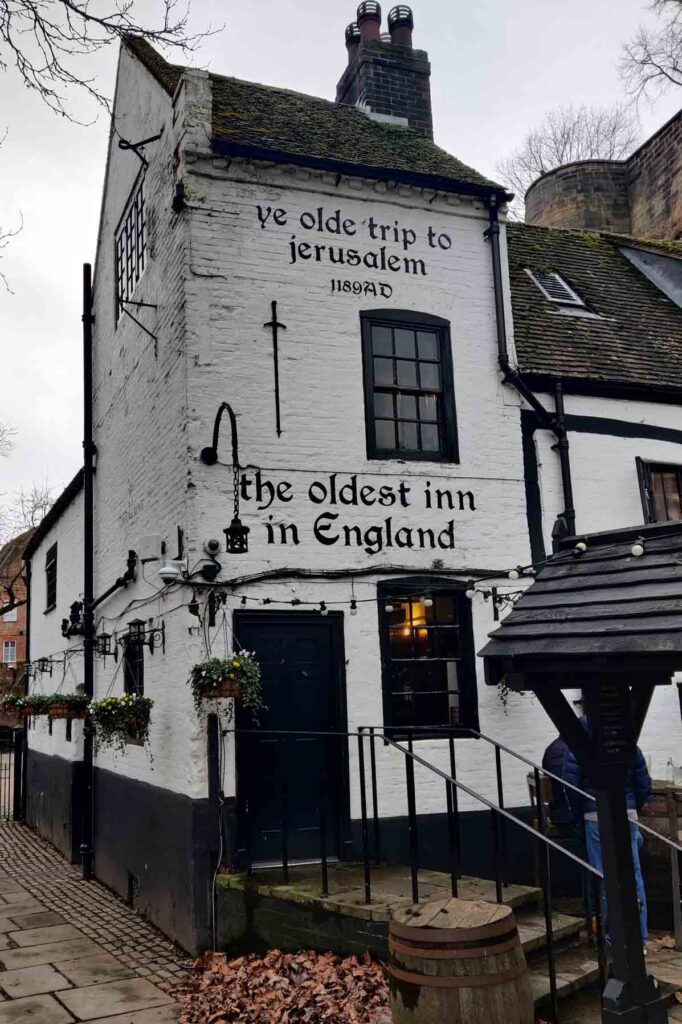
- Ye Olde Trip to Jerusalem – Said to be the “Oldest Inn in England”, it is nestled beneath the cliff on which Nottingham’s historic castle stands. It is said that King Richard the Lionheart and his men are more than likely to have gathered at this historic royal dwelling before journeying to Jerusalem in 1189AD, thus giving the pub its unusual name. A plaque located on the wall outside also states that Lord Byron was a regular patron here.
- Hart’s Hotel – Located close to the Theatre Royal and Concert Hall, Hart’s restaurant regularly plays host to many famous actors, writers and other artists playing or attending shows at the venues nearby. It also offers some very flavoursome and tasty meal options at reasonable prices!
Nottingham’s Bookshops
This selection of independent bookshops will enthral bookworms looking for something different:
- Five Leaves – is a small bookshop and publisher based in Nottingham, publishing between 10 to 15 books a year. Their roots are radical and literary, with main areas of interest including social history, politics, poetry, Nottingham, London and cityscape.
- Bookwise – is a charity second-hand bookshop with a range of quality pre-loved books, CDs and sheet music at bargain prices. Bookwise aims to raise funds in aid of the local charity, Music for Everyone, a music-education charity which provides music participation opportunities for people of all ages and abilities across Nottingham city and county.
- The Bookcase – is a friendly independent bookshop situated in the village of Lowdham, approximately 8 miles north of Nottingham. They provide a wide range of books catering for all ages and tastes, as well as a very active events programme and book launches. It has an annual Book Festival and other events throughout the year, promoting itself as “more than just a bookshop”.
Nottingham’s Literary Festivals
Poetry is the main show in town for Nottingham and for budding and established poets alike, the annual festival will not disappoint. Supportive artist programmes are also prominent:
- Nottingham Poetry Festival – runs annually in April–May. The festival’s ethos is to bring well-known, well-established national and international poets to share a stage with local, less-established poets.
- Nottingham Writer’s Studio – This is not a “festival”, but importantly, is a creative hub for big thinkers, and provides the space for writing about the things that drive them. Since 2006, this studio has supported both existing and new authors. With impressive alumni who have Man Booker shortlists and Dublin IMPAC awards under their belts, there are few better places to grab yourself a membership for.
- Writing East Midlands – Also not a festival! But another important outreach project for young, emerging writers. they run writing seminars and courses, offer mentorship and and one-to-one guidance.
Nottingham’s Theatres
There is lots of variety and choice to experience a quality theatrical experience in Nottingham. Each of the venues below offers something slightly different, but always compelling:
- Theatre Royal – Theatre Royal is one of the most beautiful Victorian theatres in Britain. Built in 1865 and later transformed in 1897 by renowned architect Frank Matcham, it provides high quality performances, including internationally renowned orchestras, contemporary dance, opera and touring drama alongside West End musicals, family shows, stand-up comedy, orchestral music and rock & pop gigs.
- Nottingham Playhouse – is one of the country’s leading producing theatres and creates a range of productions throughout the year, from timeless classics to innovative family shows and adventurous new commissions. Specifically, they aim to “create theatre that’s bold, thrilling and proudly made in Nottingham”.
- The Lace Market Theatre – are a small independent amateur theatre, located in the centre of Nottingham. The Theatre has a good reputation for its varied programme of modern and traditional drama, comedy and occasional musical, produced to a high standard by members of the trust.
- Nottingham Arts Theatre – Founded in 2001 as an educational charity, Nottingham Arts Theatre is the city’s premiere Community Theatre which hosts a varied programme of productions from local schools, colleges, universities, drama societies, musical theatre groups, dance schools and professional touring companies and individual artistes.
Recommended Guided Tours
Nottingham Booklovers Walk – Begins outside the Nottingham Tourist Centre (1-4 Smithy Row, Nottingham, NG1 2BY). Join the 2 hour guided showcasing the city and celebrating the many writers, poets and published authors associated with Nottingham. Booking required, £12 pp.
Ezekial Bone’s Robin Hood Town Tour – This is a thorough and fun way to find out more about the legendary “Hooded Man”. Visit places associated with Robin Hood and also find out more about key sites of history and culture around the city of Nottingham. Tour takes 2.5 hours, booking online required, £14.50 adults, £8 children.
Six Books Set In Nottingham
A Gun for Sale – Graham Greene
Key to the Door – Alan Sillitoe
The Killing Jar – Nicola Monaghan
Sons and Lovers – D.H. Lawrence
Beyond Black – Hilary Mantel
Darkness, Darkness – John Harvey