
Robert Louis Stevenson’s Edinburgh

Written by Niamh Martin
Robert Louis Stevenson (RLS) was a Scottish writer, poet and travel essayist, born in Edinburgh. In total he wrote eight travel books and 13 novels, including some books written for children. His most famous novels include Kidnapped, Treasure Island and The Strange Case of Dr. Jekyll and Mr. Hyde.
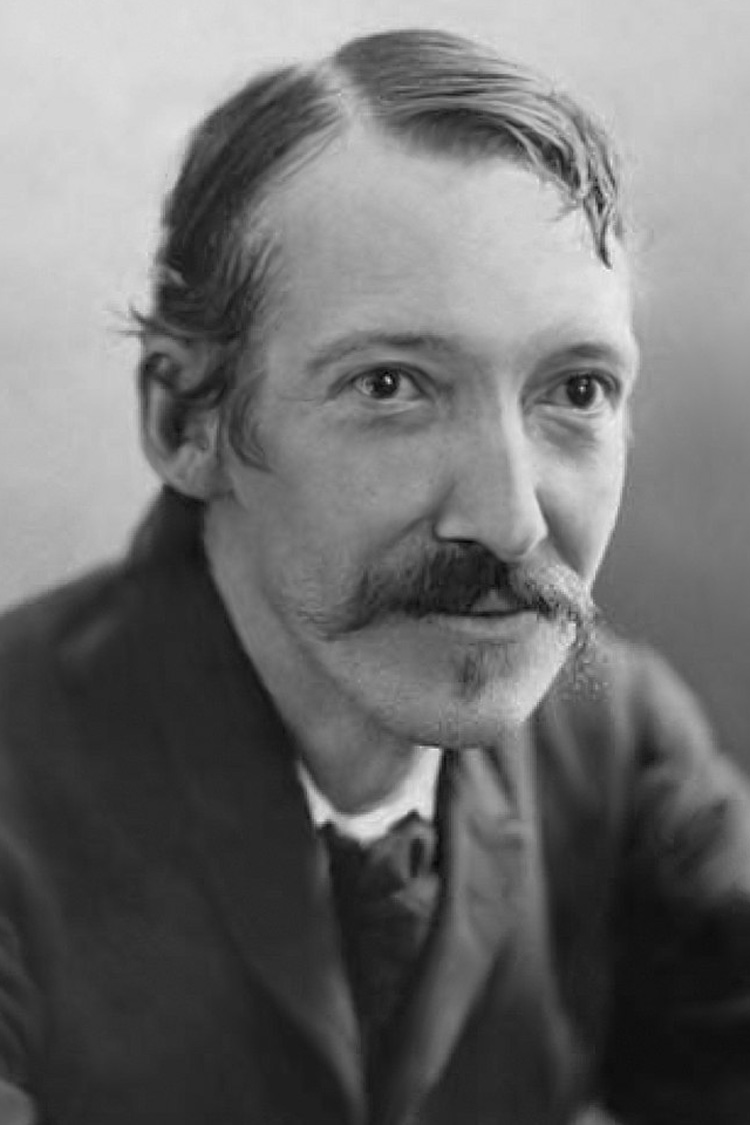
Table of Contents
Early Life
Born Robert Lewis Balfour Stevenson in Edinburgh in November, 1850, Robert lived at 17 Heriot Row from the age of six. While he did attend Edinburgh Academy in his later childhood, the Stevenson house was often the centre of his young world. Here, while being nursed through many illnesses, including tuberculosis, Robert was cared for by his mother and his beloved nurse, known as “Cummie”.
Although ill with tuberculosis from childhood, Stevenson still managed a very active childhood. During these early years, Robert’s mind was nourished by ceaseless reading as well as the stories told by Cummie of ghosts, ghouls, Scottish history, and the Bible.
As a youngster, Stevenson was a frequent visitor to Colinton, a suburb of Edinburgh. His maternal grandfather was the minister for the church in Colinton.
He also travelled with his father around Scotland on his engineering business (the Stevenson’s were responsible for building many of the lighthouses around the UK) – once descending in a complete brass diving suit to view the underwater works for the harbour at Wick, in northern Scotland, as well as journeying with his parents to Europe.

Career
Robert Louis Stevenson’s father, Thomas Stevenson, uncle Alan Stevenson and grandfather, Robert Stevenson, were highly successful lighthouse engineers. Following in their footsteps, young Robert went to the University of Edinburgh to study engineering. However, due to ill health, he soon changed to studying law, and although he graduated with his law degree, he never practised as a lawyer. By the time Stevenson finished at university, he had already decided that he wanted to be a writer.
At the age of 18, Robert dropped the name Balfour and changed his middle name from Lewis to Louis (but retained the original pronunciation). From this time on he began styling himself as “RLS”.
The dark and winding Old Town of Edinburgh contrasts with the grandly designed New Town and for Stevenson, as for many others, this duality provided inspiration. Scottish author Ian Rankin has likened the duality of Edinburgh to Stevenson’s characters and his own work, “Without Edinburgh’s split nature, Stevenson might never have dreamed up Dr Jekyll and Mr Hyde and without Dr Jekyll and Mr Hyde I might never have come up with my own alter ego Detective Inspector John Rebus”. RL Stevenson’s novels of adventure, romance, and horror have considerable psychological depth and continue to be popular long after his death, both as books and films. His novels and poems were all heavily influenced by his Gothic surroundings in 19th century Edinburgh, as well as his prolific travelling. He travelled widely as a child with his parents, around the UK and Europe. In his later life, he travelled to the U.S.A., Hawaii, Australia and the South Pacific islands.
Family
He met his wife, Fanny Van de Grift, an American mother of three in Paris 1876, and married in 1880, when she was 40 and he was 29 years old. While living in San Francisco, he met Charles Warren Stoddard, author of South Seas Idylls, who urged Stevenson to travel to the South Pacific. RLS did eventually travel to Samoa with his wife and one of her children, where he remained until his death.
Death
Stevenson died on 3rd December 1894 of a cerebral haemorrhage (stroke) in Vailima, Samoa, aged 44. He is buried there on a piece of land overlooking the Pacific Ocean.
Robert Louis Stevenson’s Literary Trail of Edinburgh
Where R.L. Stevenson lived
Stevenson was born in Howard Place, Edinburgh, not far from the site of Canonmills Loch.
From the age of six, R.L. Stevenson lived at 17 Heriot Row, Edinburgh. This was considered his main place of residence until he left for America having married Fanny De Grift. This building is now known as the Stevenson House and provides guest accommodation as well as detailed tours and a history of the house.
As a child, R.L. Stevenson frequently stayed at The Manse in Colinton, a suburb of Edinburgh. His maternal grandfather, Dr Lewis Balfour, lived here while he was minister of the parish church. A bronze statue of RL Stevenson as a boy with his Skye Terrier “Coolin” is on display at the Colinton Parish Church.
Where R.L. Stevenson studied
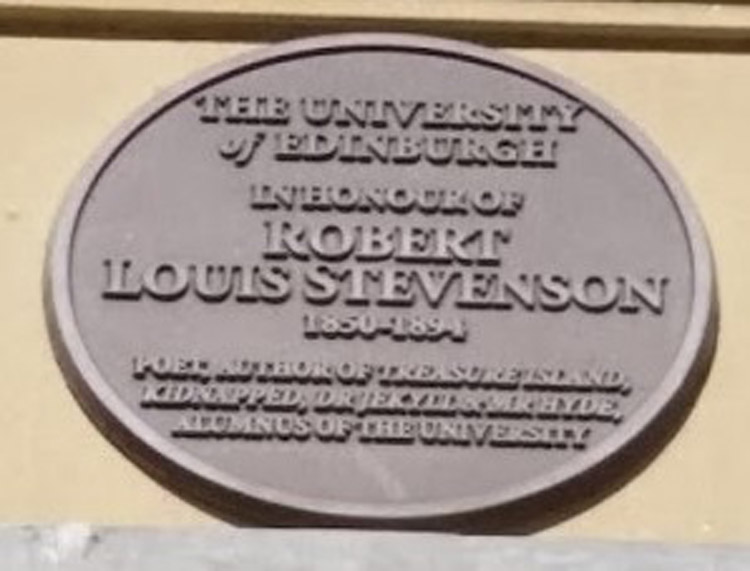
Robert initially went to Edinburgh Academy until he was 11 years old, after which he was home-schooled. He graduated with a law degree at the University of Edinburgh, having initially began but soon moving away from studies in Engineering because of ill health.
Where R.L. Stevenson worked
As a writer, Stevenson immersed himself in the literary society of London and through a network of contacts, began to write various articles which were initially published in magazines and papers, before he began to become a successful author. As a result, there are no landmarks in Edinburgh related to Stevenson’s places of work.
Other R.L. Stevenson Edinburgh literary places of interest
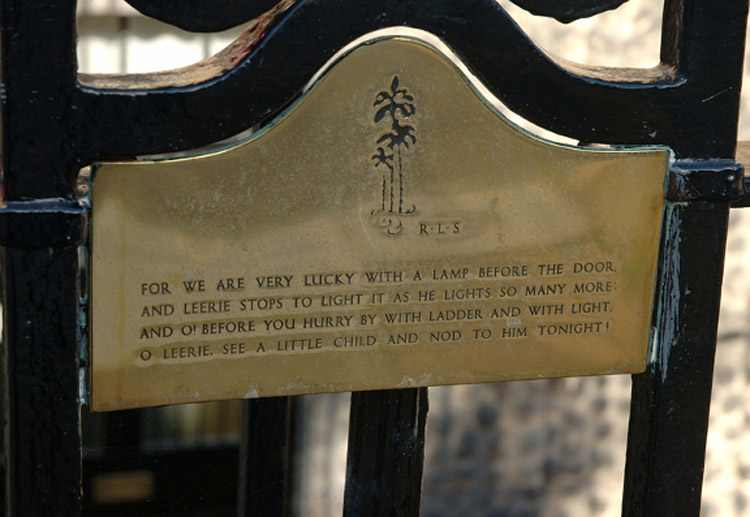
The Poetry Trail, Colinton, Edinburgh. This is a walk from the top of Colinton Village, down the Long Steps, to the Dell, with a series of plaques placed at intervals detailing poetry written by R.L. Stevenson. The poetry trail also passes the statue of RLS as a boy and continues over the bridge of the Water of Leith to the cul-de-sac in Colinton Dell.
Stevenson founded a secret society in a pub on Advocate’s Close in Edinburgh’s Old Town. Their motto was “Disregard everything our parent ever taught us”!
St. Giles Cathedral – on the outer west wall of the south aisle in the cathedral, a memorial plaque for RLS is on display, commissioned by his wife and friends.
Parliament Hall, Old Town, Edinburgh – Stevenson used the Advocate’s Library for research when he trained as a lawyer. The same books he used are now under the care of the National Library.
Brodie’s Close – The famous Edinburgh criminal, Deacon Brodie, is thought to have inspired Stevenson’s Jekyll and Hyde character. He was a reputable cabinet maker by day and a sinister burglar by night. Stevenson owned a wardrobe made by Brodie. It is now on display in the Writer’s Museum (see below). He was known to have been intrigued by Brodie’s duplicitous character and wrote a play called “Deacon Brodie” with W.E. Hanley.
The Writer’s Museum – Located on Lady Stair’s Close in the Old Town, this museum celebrates the lives of three giants of Scottish Literature; Robert Louis Stevenson, Robert Burns and Sir Walter Scott. There are numerous artefacts and curios to see, including riding boots given to RLS by a Samoan tribal chief.
Take a break from all your sightseeing and go for an atmospheric drink in the Jekyll and Hyde pub at 112 Hanover Street, or Deacon Brodies pub on the Lawnmarket in Edinburgh.

RLS Bibliography
Fiction
- Treasure Island – His first major success, a tale of piracy, buried treasure, and adventure, has been filmed frequently. It was originally called The Sea-Cook (1883).
- The Black Arrow: A Tale of the Two Roses – An historical adventure novel and romance set during the Wars of the Roses. This novel presents the Wars of the Roses, as it were, in miniature (1883).
- Kidnapped is an historical novel that tells of the boy David Balfour’s pursuit of his inheritance and his alliance with Alan Breck in the intrigues of Jacobite troubles in Scotland (1886). Catriona, also known as David Balfour, is a sequel telling of Balfour’s further adventures (1893).
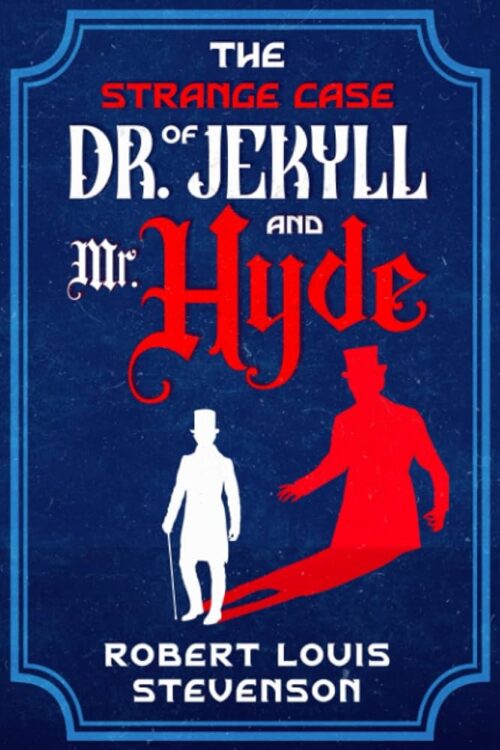
- The Strange Case of Dr. Jekyll and Mr. Hyde – a short novel about a dual personality much depicted in plays and films, also influential in the growth of understanding of the subconscious mind through its treatment of a kind and intelligent physician who turns into a psychopathic monster after imbibing a drug intended to separate good from evil in a personality (1886).
- The New Arabian Nights – a collection of tales (1882).
- The Body Snatcher – another influential horror tale (1885).
- The Wrong Box – with Lloyd Osbourne, a comic novel of a tontine. A tontine is a group life-insurance policy in which the last survivor gets all the insurance (1892).
- The Master of Ballantrae – a masterful tale of revenge, set in Scotland and America (1888).
- The Weir of Hermiston – a novel, unfinished at his death, considered to have promised great artistic growth (1896).
Poetry
A Child’s Garden of Verses – written for children but also popular with their parents. Includes such favourites as “My Shadow” and “The Lamplighter”. Often thought to represent a positive reflection of the author’s sickly childhood (1885).
Travel Writing
An Inland Voyage – travels with a friend in a “Rob Roy” canoe from Antwerp to Pontoise, just north of Paris (1878).
Travels with a Donkey in the Cévennes – solo hiking in the mountains of Cévennes, one of the first books to present hiking and camping as recreational activities. It tells of commissioning one of the first sleeping bags (1879).
The Silverado Squatters – unconventional honeymoon trip to an abandonded mining camp in Napa Valley, California with his new wife Fanny and her son Lloyd (1883).
The Amateur Emigrant – An account of the first leg of his journey to California, by ship from Europe to New York (1895).
Across the Plains – Second leg of his journey, by train from New York to California (1892).
Did You Know?
RLS ended his life as a tribal leader called Tusitala by his tribe, meaning “storyteller” in Samoan.
It may be that RLS can claim to have invented the Sleeping Bag! In his novel Travels with a Donkey in the Cévennes, he describes taking a large fleece-lined sack with him to sleep in on his journey through France.
Place to Stay
Robert Louis Stevenson’s childhood house on Heriot Row is available for guests to stay overnight. Although still a private residence, the owners of Stevenson House offer bed and breakfast and personally guided tours.