
Manchester’s Literary Attractions

Written by Niamh Martin
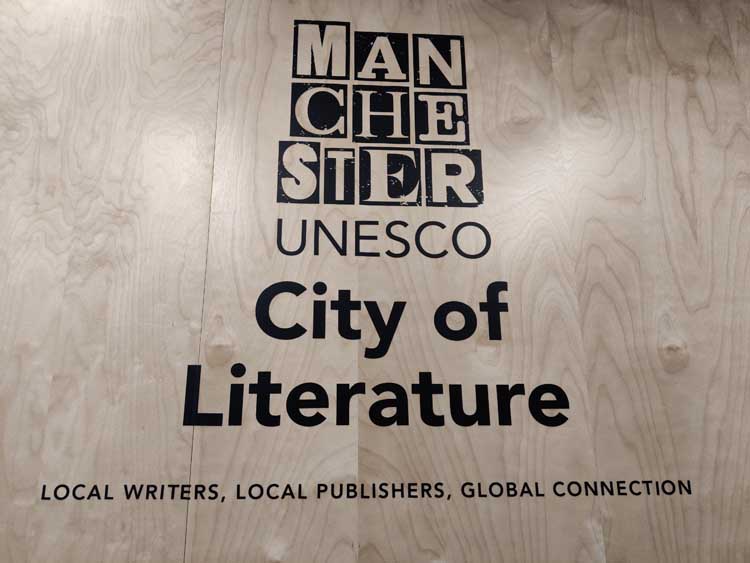
Designated UNESCO City of Literature in 2017.
Manchester’s literary scene is as diverse as its history and population. From radical pioneers such as Emmeline Pankhurst and Anthony Burgess to socially influential writers such as Elizabeth Gaskell and Walter Greenwood, Manchester portrays itself through its literature, as an inclusive, socially conscious and forward thinking city.
Legacy
Manchester’s industrial and pioneering history has provided a unique literary heritage. It is a transformational city. Think – Industrial revolution, Suffragette movement, Trades Union movement, Anti-slavery movement, and its possible to understand how, with time, this bubbling energy has been channelled by artists and writers into something more creative.
Manchester writers have provided many different stories because of the diversity found within the city. Despite moving away from the city, Anthony Burgess still appreciated the grounding that Manchester had provided him to become the successful writer he became:
“It’s always good to remember where you come from and celebrate it,” he said. “To remember where you come from is part of where you’re going.”
Anthony Burgess
Many famous authors have indeed celebrated the city’s heritage and wrote about it; Elizabeth Gaskell drew inspiration from the squalid working class conditions of the time for her novels, while Burgess’s most famous work, A Clockwork Orange, was based on the Moss Side street gangs he grew up with. But Manchester hasn’t dwelled on the past, it has taken its history and is using it to carve out its future, as Burgess refers to above. Modern poetry has a significant home in Manchester (with help from Lemn Sissay and Carol-Anne Duffy) and significant investment by the city in its libraries, grassroot literature events and many creative writing centres means that more and more opportunities are being provided to writers. The live literature scene in Manchester is very vibrant, producing a great deal of new literature and a very promising future for literary Manchester.
Whatever your reason for visiting Manchester, here are seven literary attractions not to be missed!
Table of Contents
Manchester’s Libraries
Manchester is heaven for any library enthusiast. The city is home to four historic libraries that are open to the public as well as 23 public libraries. For bibliophiles, visiting some of these libraries is high on the list of what to do in Manchester.
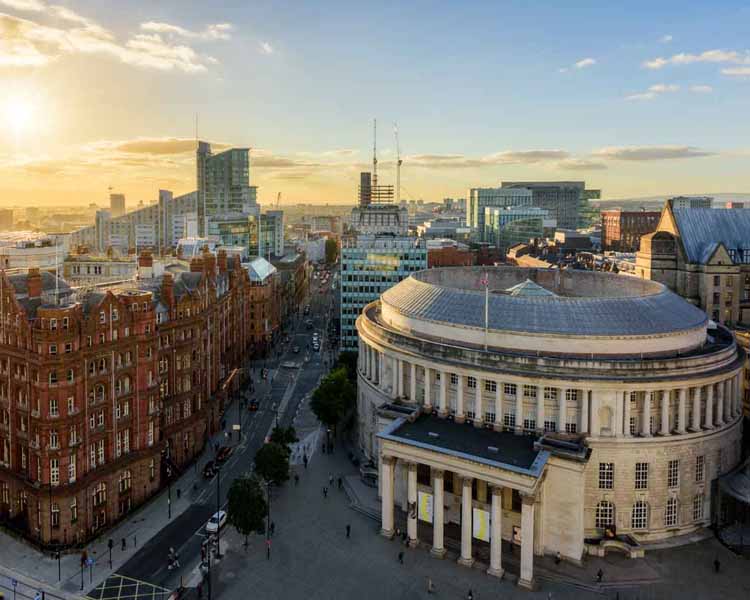
- Manchester’s Central Library is a relatively modern library compared to others, being officially opened in 1934. It’s an impressive structure designed by architect Vincent Harris, who worked very closely with the Chief Librarians on the unusual design of the building, which was strongly influenced by visits to American libraries. Although Harris was a great admirer of Roman architecture and Central Library is often compared to Emperor Hadrian’s Pantheon in Rome, it is in fact similar to how the American Library of Congress was built. Harris’s design created a feeling of light, space and openness in the library. Start at the central reading room upstairs which has a stunning, domed ceiling that lets in lots of natural light. But don’t stop there – there’s so much to explore at Manchester Central Library; a virtual archive and extensive family history centre, a dedicated music library and children’s library. Manchester Central Library is free to visit, whether or not you are a Manchester resident and it also has the distinction of being the busiest public library in Britain.
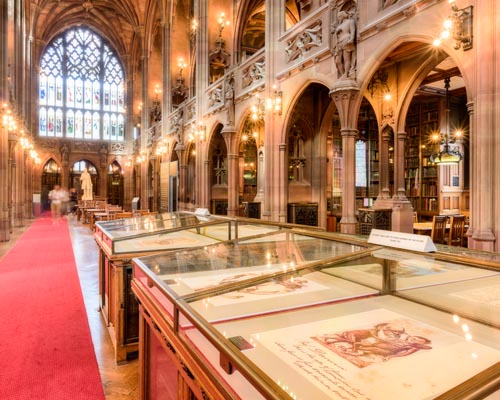
- Portico Library – is a subscription library, opened since 1806, with a historic collection of over 25,000 books. It is also open to the public for free exhibitions, with an opportunity to view and handle books and items from the archive, on display in the gallery, which has a beautiful glass-domed ceiling, inserted in 1920. For bibliophiles that wish to delve a little deeper into the archives, it is possible to become a member, reader or researcher. Housed inside a building built to make it look like a Greek temple, complete with pillars, it once only served a select group of rich, male members – thankfully, no longer the case. Famous members have included John Dalton, Reverend William Gaskell (Elizabeth Gaskell’s husband) and, more recently, Eric Cantona.
- John Rylands Library – opened in 1900, this library is a stunning neo-Gothic building that houses one of the world’s finest collections of rare books, manuscripts and archives. It has been part of the University of Manchester since 1972 and now houses the majority of the Special Collections of the University. They contain some of the most significant printed books and manuscripts ever produced, alongside unique archive collections, maps and visual material, documenting a wealth of traditions from around the world. In addition, the library holds personal papers and letters of notable figures, among them the novelist Elizabeth Gaskell and the scientist John Dalton.
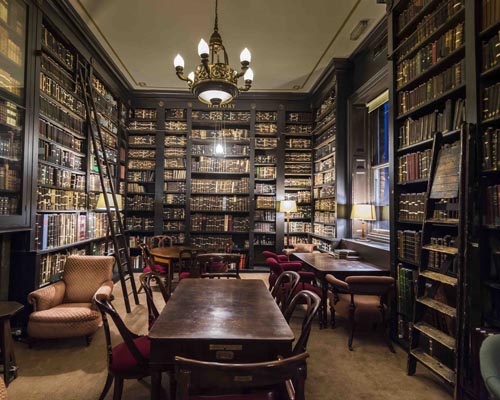
- Chetham’s Library – was founded in 1653 and is the oldest public library in the United Kingdom. A visit to Chetham’s Library will satisfy any longstanding wondering of what a 17th century library looked and smelled like – what you see in the library is very similar to how it was in its day. A guided tour of the library is the only way to gain entry – be sure to book in advance – and will provide visitors with interesting facts and stories that relate to the budding friendship between Karl Marx and Friedrich Engels, chained books, as well as an imprint of the devil’s hoofprint (having been summoned by John Dee) and a 17th century catflap – a vital accessory to deal with regular infestations of vermin.
- Manchester Poetry Library – is an emerging entity in Manchester and is part of the Manchester Metropolitan University since 2021. This new institution is open six days a week and is dedicated to the research and celebration of poetry, and is building up a catalogue of contemporary poetry books and recordings.

Manchester’s Literary Museums
Manchester’s literary history and range of creative output is on display in a variety of literary museums across the city.
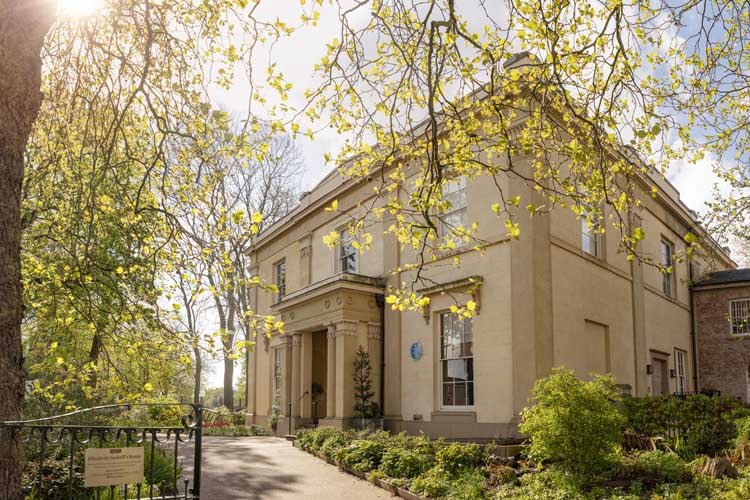
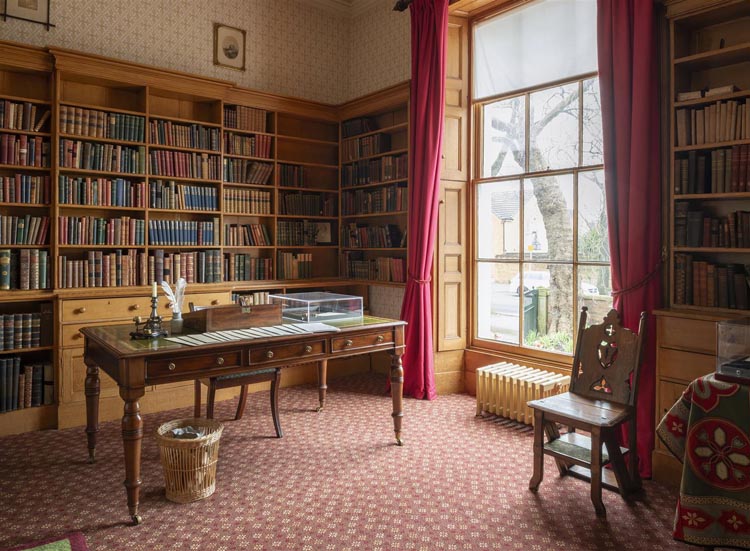
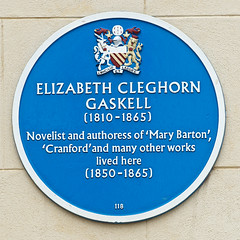
- Elizabeth Gaskell’s House – This is a definite must-see for fans of books and history, as well as the amateur sociologists among us all. It provides a fascinating insight into the lives of middle-class Victorians through the lens of an excellently refurbished home, with exceptional attention to detail given to furnishings, household items and personal effects, reverently reflecting the day-to-day lives of the Gaskell family in the mid 1800’s. We know this, as researchers from Manchester Historic Buildings have worked tirelessly to discover, locate and refurbish items owned by the Gaskell family, or when this has not been possible, to obtain an item that mirrors it as close as possible, right down to the finest detail. For example, a small sample of wallpaper from Gaskell’s time was located behind a plastered wall and was then reproduced by a specialist company and has been reapplied to rooms such as Reverend William Gaskell’s office and the family living room. Original artefacts such as correspondence from Elizabeth’s friend, Charlotte Bronte, paintings by the Gaskell children and what is believed to be Elizabeth’s wedding veil are all on display. This is a great hands-on experience and will be of interest to even those with a passing interest in the writings of Elizabeth Gaskell, because of the associated history, spectacular architecture and changing exhibitions on display here. Booking is advised, tickets approximately £7.50 and last admissions are strictly at 3pm. Read here for further information about Elizabeth Gaskell’s Manchester.
- The International Anthony Burgess Foundation – is a live venue within a converted Victorian mill, with a licensed bar, an exhibition space as well as an extensive Anthony Burgess archive. Anthony Burgess was a prolific, if controversial, novelist, poet, playwright, journalist, composer, linguist, translator and critic, but he is perhaps best known for the demanding and hugely effectual A Clockwork Orange. He is considered to be one of Manchester’s greatest, yet contentious, cultural figures. Within the building at Chorlton Mill, there are plenty of artefacts to satisfy the ardent Burgess fan and scholar, including some of his furniture and musical instruments. A visit to the bookshop and café will reveal a bounty of current and more obscure editions of Burgess’s books to be enjoyed over a beverage. However, be aware that the Reading room is only available for archive visits with a pre-booked appointment and, for the immediate future, the daytime café will remain closed and the licensed bar is only open for events.
Manchester’s Literary Icons
Manchester has been “home” for many well-known and influential writers over the course of the past couple of centuries. For some, they were born and lived most of their lives in and around the city, for others it was a temporary residence or regular visiting place, while for others still, it became their home from home. Dotted around the city are a number of landmarks or places of interest associated with these famous Manchester literary icons:
- Charlotte Bronte – author of Jane Eyre, began writing this novel while visiting Manchester. She never lived here but often visited her great friend, author Elizabeth Gaskell, and stayed at 59 Boundary Street West. A blue plaque used to denote this building, but this area has now been overtaken by University of Manchester buildings.
- Frances Hodgson Burnett – author of childhood favourites such as The Secret Garden and A Little Princess was born and raised in Manchester, staying there until her late teenage years. Her home at 141 York Street lies about 500m from the house where Charlotte Bronte resided in Boundary Street, but unfortunately this building has also been subsumed by progressive buildings owned by the Metropolitan University of Manchester. Although the creep of concrete is a disappointing legacy for these authors, just a few miles out of the city, in Salford, is Buile Hill Park, where Frances discovered an “overgrown and mysterious garden”. This is believed to be the inspiration for The Secret Garden, and is now freely accessible to all as a public park .
- Anthony Burgess – author of A Clockwork Orange was born and raised in Manchester and educated at The University of Manchester. His childhood home is in the Manchester suburb, Harpurhey, at 91 Carisbrook Street.
- Dodie Smith – author of 101 Dalmations and I Capture The Castle, was born in Bury but moved to Old Trafford in Manchester at two years of age to live with her mother and grandparents, after her father died. Her Manchester childhood home, Kingston House, was at 609 Stretford Road.
- Elizabeth Gaskell – author of Cranford, The Biography of Charlotte Bronte and North and South was born in London but lived her married life in Manchester, where she wrote all of her novels. Read here for more information about Elizabeth Gaskell’s Manchester.
- Lemn Sissay – present-day poet, was born in Wigan but moved to Manchester at the age of 19. He has been the official poet of the 2012 London Olympics, chancellor of the University of Manchester (2015-22) and was awarded the PEN Pinter Prize in 2019. In addition to his award winning poetry, Sissay has also written many plays and books, including his engaging autobiography My Name Is Why, about his early life in the British care system.
- Carol Ann Duffy – present-day poet. Born in Glasgow, Duffy is the Professor of Contemporary Poetry at Manchester Metropolitan University and was appointed Poet Laureate in 2009 (until 2019).


Manchester’s Literary Pubs
The pub scene in Manchester may not have been as obvious a meeting place for the city’s literary greats to debate and discuss the great themes of the day, as it was in other cities through the centuries. However, there are still a few worth paying a visit to, which have varying associations with significant moments of Manchester and English history.
- Sam’s Chop House – This pub was established in 1868 by two London brothers and has retained its cosy, olde world feel. It was a favourite haunt of Anthony Burgess, who described it as full of “cotton brokers gorging on fresh meat”. Today, it still prides itself on cooking with fresh ingredients that are sourced directly from British suppliers. There is a statue on the bar which commemorates the artist LS Lowry who was also fond of the place.
- Sir Ralph Abercromby – Located at 35 Bootle Street, this is the last standing building from the site of the Peterloo Massacre of 1819, an event written about by notable writers such as Lord Byron, George Cruickshank. More recent literary regulars include Salford-born Dr. John Cooper Clarke, the self-styled “punk poet”, often referred to as the “Bard of Salford”. Named after an 18th century British commander, the Sir Ralph Abercromby serves some quality ales, including speciality IPAs.
- The Briton’s Protection – Located at 50 Great Bridgewater Street, this pub was established in 1811 and is believed to have housed some of the injured during the Peterloo massacre of 1819. A life-sized mural depicting the massacre is located inside. This is noteworthy as the event inspired Percy Shelley’s poem ‘The Masque of Anarchy’. It’s cultural and literary links are not just in the past as it hosts ‘Word of Mouth’ storytelling sessions and has been popular with people such as Elbow front man, Guy Garvey. It has an ornate interior and over 300 whiskies to mull over.
- The Bank – Located at 57 Mosley Street, this grand neo-classical building, complete with columns and built in Runcorn stone, looks more like a historical artefact than a watering hole. It has a strong literary history. From 1806 it was used to house the Portico Library (see Manchester’s Libraries above), a renowned Victorian place of knowledge. You can still visit the library upstairs via a little side-entrance which takes you up a flight of steps and into an impressive domed reading room. The pub downstairs is named after the Bank of Athens which leased the building in 1921, and offers a grand interior as well as a range of food and ales.
Manchester’s Bookshops
In addition to the several incredible, historic libraries, Manchester has an impressive number of independent bookstores to visit. From bookstore cafés to quirky second-hand book stalls, it’s a genuine pleasure to while away some hours wandering around Manchester’s bookshops, leafing through best sellers, hunting for that rare vintage edition or waiting to be surprised by something unexpected. Below is a list of just a few of these little treasures, each with their own niche areas they like to promote.
- Anywhere Out Of The World – This hidden gem of a bookshop in Manchester’s Northern Quarter stocks shelves upon shelves of second-hand tomes. If you are looking for an adventure where your mind is opened to new ways of thinking, take a wander along to this shrine to literature. A wee while in this place will leave you buzzing with the excitement of sinking your teeth into a classic hardback, previously loved. Enjoy chatting with highly knowledgeable staff who will help you find something that you simply won’t be able to put down. Anywhere Out of the World Bookshop is open Thursday to Sunday, 12:00 p.m. until 6:00 p.m.
- Travelling Man Bookshop – And now for something completely different – why not give Travelling Man bookshop a whirl. This is a gaming and graphic novel emporium – a haven for the geekiest of geeks, and lots of fun for the rest of us too. The choice of books, comics and graphic novels is arguably the best in Manchester, with incredibly helpful and friendly staff too.
- Chorlton Bookshop – If you’ve ever dreamed of owning a bookshop, then in your dreamiest moments, this is probably the bookshop style you’ve imagined. It’s a very cosy, welcoming and satisfying space. It’s small but with numerous curio’s and interesting artefacts to catch your eye as you wander around. It has a vast array and selection of books – and whatever it doesn’t have on its shelves, the staff in this family-owned bookshop will happily order in for you (and deliver for free to Manchester residents).
- Chapter One Books – Chapter One Books is an independent bookshop and coffee shop on Lever Street. This is a great place to pop along too if you are seeking to sit, drink quality coffee and read/write your book. It is more coffee shop than book shop, but also holds regular book workshops and other bookish events.
Manchester’s Literary Festivals
Manchester has hosted a dedicated literary festival for nearly 20 years. It also holds numerous, frequent and diverse literary events in smaller venues, incorporating all forms of literature; poetry, prose and plays. Each of these forums provides an opportunity for the city to celebrate its historical literary connections while simultaneously driving forward with its emergent contemporary style of literature. If time permits, it is a very worthwhile endeavour to try and catch one of the events below and really embellish your literary visit to Manchester.
- Manchester Literature Festival – Usually held in October, this festival attracts writers from across the globe, as well as locally grown talent. Previous guests have included novelists Zadie Smith, Kate Mosse and Deborah Levy and poets Lemn Sissay, Simon Armitage and Linton Johnson, demonstrating the diverse selection of talent on offer for audiences to experience. Hosted in venues across the city, this festival likes to “connect, entertain, challenge and show us new ways of looking at and navigating the world”.
- Festival of Libraries – is a summer festival and has recently been established to celebrate the important role that the network of 133 libraries across Manchester play on promoting culture, wellbeing, reading, creativity and sharing of information. The vibrant programme of events, such as exhibitions, concerts, debates and writing classes, takes place across local libraries as well as internationally renowned spaces such as Chetham and Portico libraries.
- Elizabeth Gaskell House Events – Each year, the team at Elizabeth Gaskell’s House on Manchester’s Plymouth Grove, picks one of the famous 19th-century author’s novels and, with the help of knowledgeable speakers and enthusiastic contributors, examines the text in details. This year it is the turn of Wives and Daughters. Throughout the year, usually on a Wednesday, a host of events celebrate this fascinating novel and TV adaptation and audiences will have the chance to find out more about the context in which the book was written, including a background to Elizabeth Gaskell’s personal life and the influence of the industrial Manchester in which she lived. This is a great event for students of literature, history, sociology and, of course, avid bibliophiles. Tickets £5.
- International Anthony Burgess Foundation Events – Throughout the year, a number of musical and literary events are held at this venue, to celebrate and reflect the various talents and interests of this cultural factotum. Up-to-date details are available on the website and ticket prices vary from free to approximately £15, depending on the event.
Manchester’s Theatres
It’s rather telling that there are 80 different venues listed on the Manchester Theatres website, as places to go and watch some live theatre when in Manchester. These range from pubs to community halls and arts theatres to large capacity national theatres, similarly reflecting the breadth and interest in literature and plays across Manchester. So, no matter where you find yourself staying or wandering in the city, there is bound to be somewhere to go for some theatrical fun. Below are a small selection, but please see the Manchester Theatres website for a more extensive and up-to-date list of what’s on and where.
- The Palace Theatre – opened in 1891 and has a capacity of 1955 seats. It’s programme of events include; plays, musicals, opera, comedy, dance, concerts and sing-a-longs. Famous actors to have graced its stage include: Judy Garland, Gracie Fields, Danny Kaye, Noel Coward, Laurel and Hardy, and Harry Houdini
- The Lowry – at Salford Quays opened in 2000 and has two theatres; The Lyric, which is the largest UK stage outside the West End with a capacity of 1730 and The Quays with a capacity of 440. Its programme of events include operas, dance, musicals, plays, comedy, exhibitions and visual / digital arts. Popular shows that have played here include; Britain’s Got Talent, The Royal Variety, Jesus Christ Superstar, War Horse and A Christmas Carol.
- Manchester Opera House – opened in 1912 and is one of the largest theatres in Manchester with a capacity of 1920 seats. Its programme of events includes musicals, dance, opera, comedy, concerts and the family favourite, the Christmas pantomime. Some of the biggest productions have included; The Phantom of the Opera, Riverdance and the world premiere of Back To The Future The Musical.
7 Books Set in Manchester
Mary Barton – Elizabeth Gaskell
The Curry Mile – Zahid Hussain
A Taste Of Honey – Shelagh Delaney
Automated Alice – Jeff Noon
Love On The Dole – Walter Greenwood
Little Wilson and Big God – Anthony Burgess
The Emigrants – WG Sebald
Literary Place to Stay
Comfortable, affordable, very central and named after a literary giant! Try Wilde Aparthotels on St. Peters Square.
Walking Tour
Try this free walking tour of the city for an excellent overview of the city’s history and heritage. Everyday at 11am.