Dublin’s Literary Attractions

Written by Niamh Martin
Designated UNESCO City of Literature in 2010.
For its size, Dublin punches well above its weight in producing global literary superstars. The city has given us three Nobel Prize for Literature winners; George Bernard Shaw, Samuel Beckett and W.B. Yeats, and three Booker Prize winners in Roddy Doyle, Iris Murdoch and Anne Enright.
Legacy
Other famous Dublin writers include Oscar Wilde, James Joyce, Maeve Binchy, Bram Stoker and Sebastian Barry.
It is an impressive list of literary legends, and for booklovers of all genres and generations, a trip to Ireland’s capital city will not disappoint.
James Joyce saw his home town as “a city of poets, dreamers and storytellers, where imagination takes flight”.
Visitors to Dublin can get a real sense of what Joyce meant, by experiencing the literary culture that is embedded within the city.
Literary references and attractions are scattered across the city, making Dublin a great destination for those with a general interest in books, specific authors or literary masterpieces!
Whatever your reason for visiting Dublin, here are seven literary attractions not to be missed!
Table of Contents
Dublin’s Libraries
Dublin city’s libraries will leave an imprint on you forever. They are beautiful, atmospheric, historically symbolic and yes, full of stories!
- Marsh’s Library – Ever wonder what libraries looked like in the 18th century? How did it feel to visit one and what types of books were available for visitors to peruse? Well, take a trip to Marsh’s Library in Dublin and find out! This library has remained practically unchanged since it opened over 300 years ago and was a regular place of research for Bram Stoker, James Joyce, Jonathan Dean Swift. The renowned Scottish author, Walter Scott, was also a visitor.
- The Old Library (Trinity College Dublin) is without doubt among the most impressive libraries you’re ever likely to visit. The beauty and character of the Long Room is almost spiritual and will stay with you long after your visit. The legendary Book of Kells is also in residence here, but now has its own interactive attraction – the Book of Kells Experience – housed in a brand new, contemporary Pavilion located near to the Old Library on the University grounds. Here you can undertake an immersive 360 degree journey of the book and see a digital projection of The Long Room as it may look in the future.
- National Library Ireland – This is where you will find an archive of every book ever written by an Irish author. It also contains a stunning reading room and houses a permanent William Butler Yeats exhibition, as well as an exciting programme of other exhibitions and events throughout the year.


Dublin’s Literary Museums
Dublin’s literary history and range of creative output is on display in a variety of literary museums across the city.
- Chester Beatty Library – Described by the Lonely Planet as “not just the best museum in Ireland, but one of the best in Europe”, it was founded as a means to promote “an appreciation of world cultures” and holds manuscripts, rare books and other valuable oddities from around the world, including the earliest known copies of the four New Testament gospels.
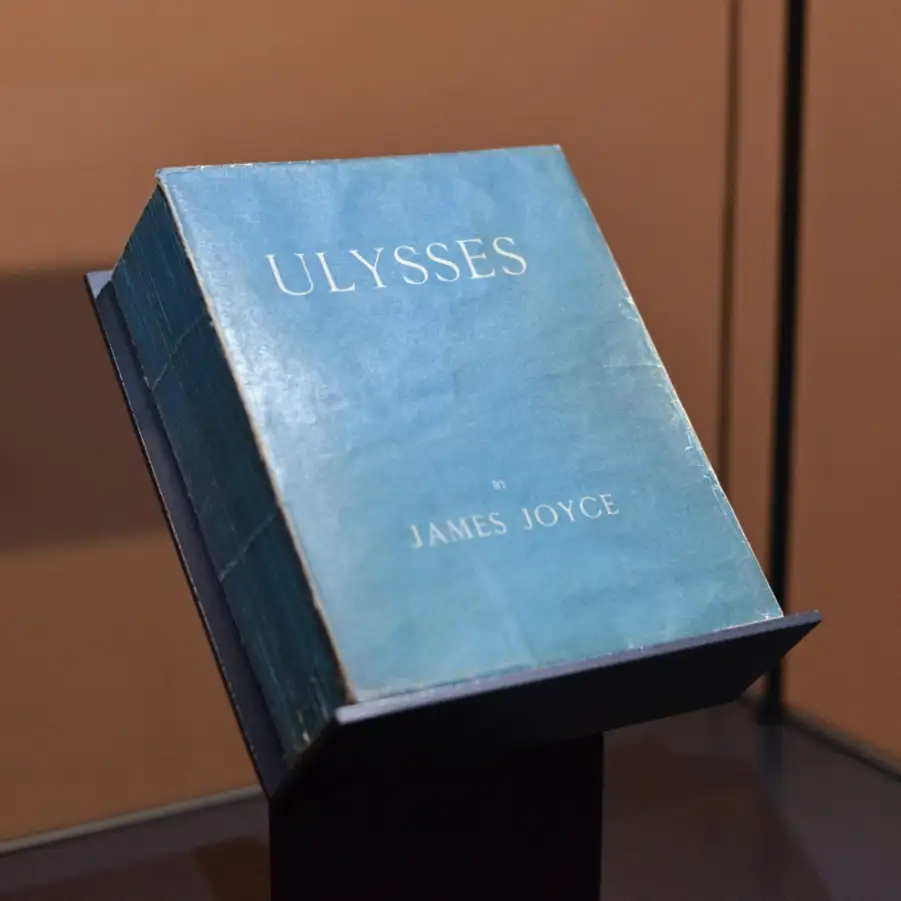
- Museum of Literature Ireland (MoLI) – Nicknamed Moli as a nod to Molly Bloom of Ulysses fame, this museum also houses the first ever copy of James Joyce’s celebrated book, known as “Copy No. 1 – Ulysses”. The museum is also an excellent setting for combining the literary old and new, exhibiting unique literary artefacts from W.B. Yeats and Edna O’Brien with modern immersive displays from contemporary writers, such as Pat McCabe. The Commons Café on the lower ground floor is also a veritable treat, backing as it does onto the serene Iveagh Gardens.
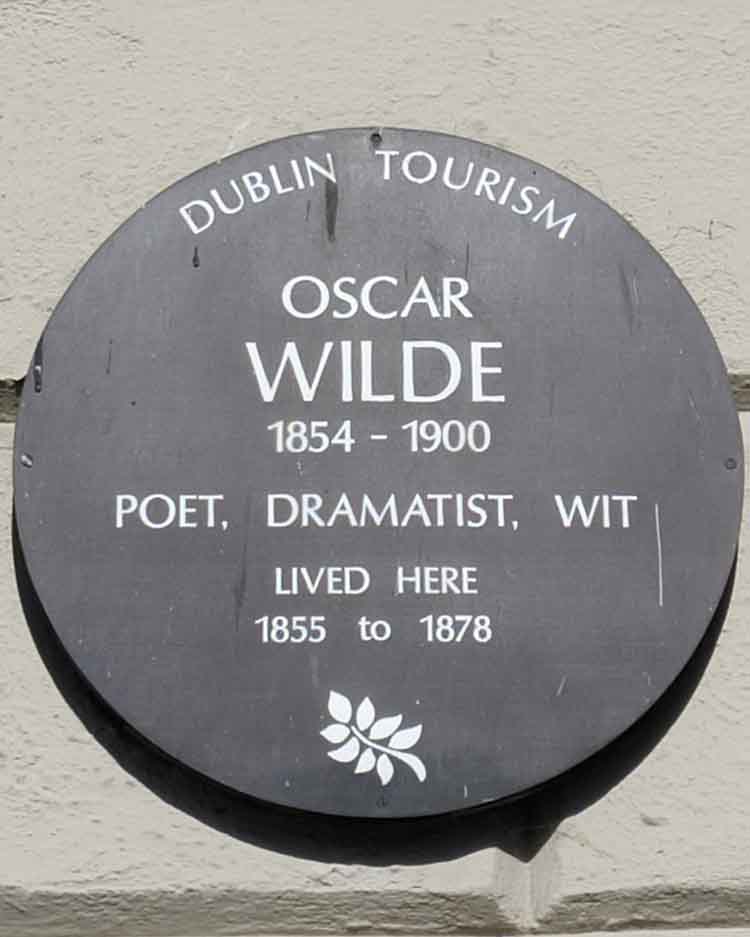
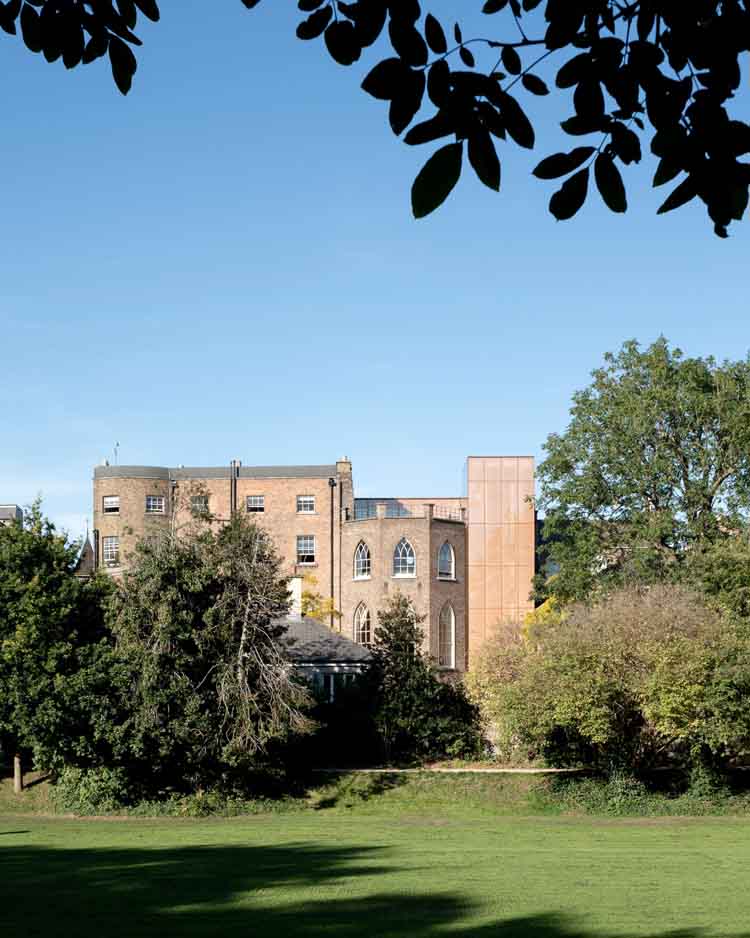
- Oscar Wilde House – This is the beautifully preserved childhood home of the renowned Dublin wordsmith. Now owned by American College Dublin, it is open to visitors at weekends during term-time and 7 days a week during the summer. The guided tour is a magnificent way to fully appreciate the world young Oscar was brought up in, with regular exposure to society debates and dinners hosted by his poet mother, Lady Jane Wilde (Sperenza) and father, author and surgeon, Dr. William Wilde.
- The National Print Museum – If you are interested in gaining an understanding of how historical Dublin newspapers, books and magazines were designed and produced, then head to this museum for a behind the scenes view of printing history.
- James Joyce Centre and James Joyce Tower and Museum – For all Joyce enthusiasts, these are a pair of must-see places. Even for those with a passing interest in the confounding literary style of this Dublin writer, there is much to explore, with a variety of changing exhibitions, walking tours and Bloomsday paraphernalia to delve into.
Dublin’s Literary Icons
Dublin is very proud of its literary tradition and any visitor to the city will be pleasantly occupied with spotting the numerous literary plaques, statues, bridges, place names and inscriptions on buildings, dotted across the city. Whether you are a casual observer or decide to turn it into a game of “Literary Bingo”, you will find literary references lurking on many streetscapes – so keep your eyes peeled! Here are a few to start off with:
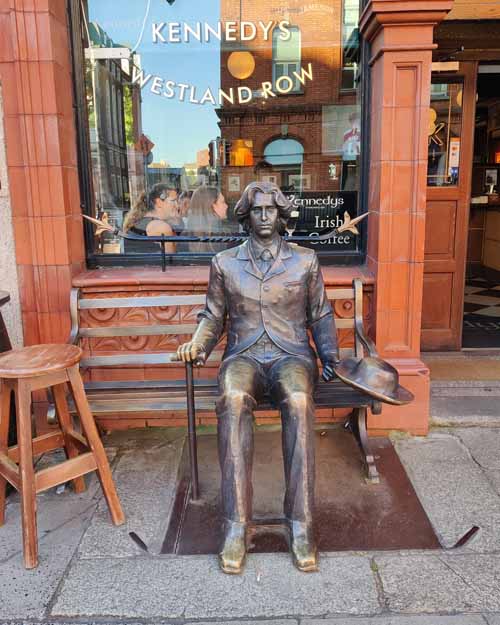
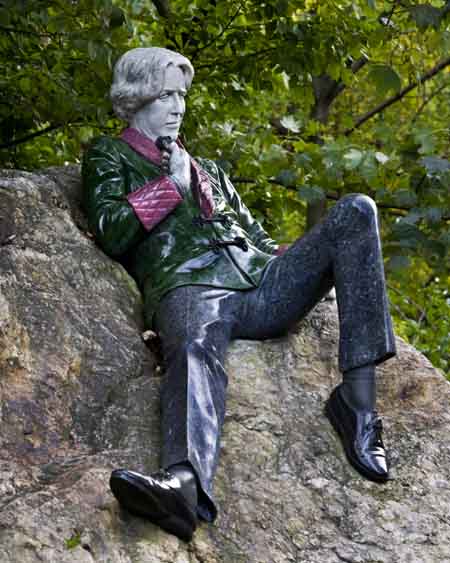
- Oscar Wilde – in his famous reclined position opposite his childhood home in Merrion Square or around the corner, sitting on a bench outside Kennedy’s pub.
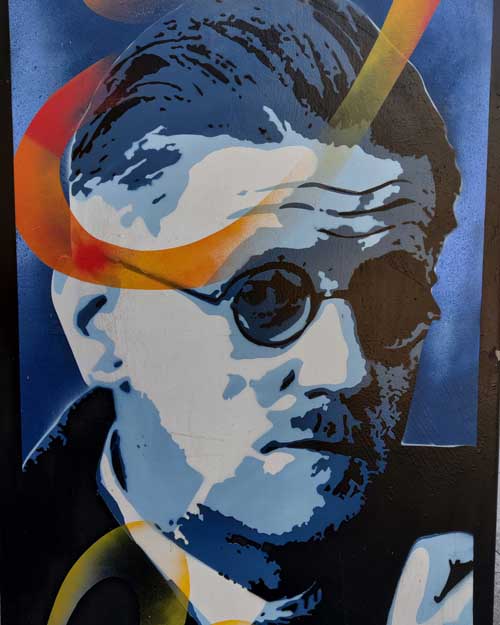
- James Joyce – Take a walk across the eponymous bridge named after the author at Blackhall street, or spot him leaning loftily on his walking stick on the corner of O’Connell and North Earl streets. Alternatively, spot his bust in St. Stephens Green or his image plastered to a utilities box on Nassau Street.
- George Bernard Shaw – his likeness is displayed at the National Gallery at Merrion Square and quotes from his many masterpieces are scrawled across Milano’s restaurant on Dawson street.
- Bram Stoker – a blue plaque is displayed on Kildare Street where this literary Dubliner lived.
- Check out the Royal Canal to see Brendan Behan or take a walk along the leafy Grand Canal and take a seat beside Patrick Kavanagh.
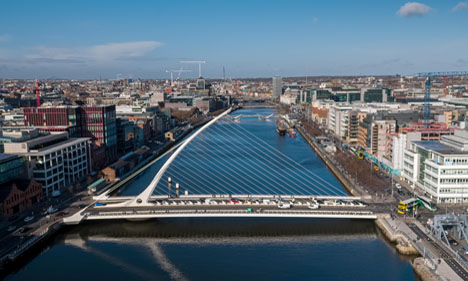
- Samuel Beckett – take a stroll across this eponymous bridge, located near the Convention Centre along the River Liffey.
Dublin’s Literary Pubs
Storytelling, it seems, is in Dublin’s DNA. By the 19th century, Dublin had over 3,000 pubs, which over time became meeting places, predominantly for men, who wished to escape tenement life and work stresses. This is where they told and shared their stories, while enjoying a wee tipple.
As the 20th century evolved, meeting places for literary discussions moved from Georgian townhouses to pubs. Here poets, journalists and writers debated the social and political events of the day.
Popular pubs for these alcohol-fuelled literary discussions were:
- McDaids
- Kehoes
- O’Donoghues
- Davy Byrne’s
- Neary’s
- Toner’s
- Horseshoe Bar (Shelbourne Hotel)
- The Palace Bar
Many of these pubs still retain their “olde worlde” charm, serving drinks from behind original wooden counters to customers perched on high stools, just as they did to poet Patrick Kavanagh and playwrights Sean O’Casey and Brendan Behan (McDaids). Grab the opportunity to visit the only pub that WB Yeats would drink in (Toners) or Joyce’s favourite Dublin pub, before he left permanently for France and Switzerland (Davy Byrne’s).
And if alcohol is not your thing, literary Dublin has still got you covered! Make your way to Bewley’s Café on Grafton Street for a smooth, enriching coffee or tea, served in the favourite café of some of Dublin’s greatest writers. Opened in 1927, Bewley’s Café is an experience worth sharing. It continues to be a meeting point for Dubliners to talk, discuss and debate – as well as curl up in a corner with a favourite book. It’s oriental design was based on similar café’s in Paris and Vienna of the time and attracted such literary greats as Samuel Beckett and James Joyce.
Dublin’s Bookshops
Even as a casual visitor to Dublin, literature feels like something you can take part in. Why not visit the abundant independent bookshops dotted around the city. Dubliners love these often quirky shops and many have their own niche areas they like to promote.
- The Winding Stair combines reading and eating in an attractive setting. Roam the bookshop for contemporary or second-hand books before settling down with a cappuccino and something to nibble.
- Ulysses Rare Books is a great spot for those interested in first editions of works by some of the great Dublin writers such as James Joyce, Oscar Wilde and W.B. Yeats.
- Chapters is Ireland’s largest independent bookshop, so will most likely have what any visitor is looking for among their 20,000 titles, ranging across multiple genres and including both new and second-hand books.
- Books Upstairs is Dublin’s oldest independent bookshop (since 1978) and is associated with an eclectic stock of new and second-hand books reflecting their commitment to the principles of social, economic and cultural inclusivity.
Dublin’s Literary Festivals
Dublin hosts several different literary festivals, each with a different focus but all providing a means of celebrating the city’s continuing legacy of producing exceptional writers. These festivals provide a platform for the city to endorse its modern day acclaimed writers such as Joseph O’Connor, Anne Enright, Roddy Doyle, Marian Keyes.
Many of these renowned authors attend these festivals and are known to mingle and meet the public – even more incentive to head to Dublin for a literary themed holiday!
- International Dublin Writer’s Festival – is a festival for both aspiring and experienced writers. Its focus is on providing opportunities for writers to learn from key industry professionals, such as published authors and highly-experienced publishers and marketing professionals.
- International Literature Festival Dublin – Stages events such as readings, conversations, debates and screenings to celebrate the very best of Irish and international writers, poets, playwrights and screenwriters.
- Dublin Book Festival – this is an annual literary event that showcases Irish published books, authors and editors. It has a diverse programme, including history, poetry, literary fiction, non-fiction and comedy. It also has a full family and schools programme.
Dublin’s Theatres
Going to the theatre in Dublin is a very affordable activity, compared to other capital cities and is a great way to get under the skin of this literary city. Each offer something slightly different by way of theatrical focus, details of which are provided below:
- Abbey Theatre – The Abbey is Ireland’s national theatre and was founded in 1904 by W.B. Yeats and Lady Gregory. It has a deep and affecting relationship with Ireland’s history and, as an artistic centre, is front and centre at supporting Irish writers and artists.
- Olympia Theatre – The Olympia has undergone many transformations from music hall in 1881 to Playhouse in the mid 20th century, to its current reincarnation as a venue that attracts world-renowned theatre productions and actors (such as John Gielgud, Cillian Murphy and Brendan Gleeson). It is also a popular intimate music venue for large bands wishing to do acoustic sessions, e.g. David Bowie, Radiohead and Adele.
- Gate Theatre – The Gate is an artist-led theatre with an ambition to create “an international home for Irish artists and an Irish home for international artists” and this is reflected in its productions which range from original scripts, intended to support new and emerging artists, as well as reworking older plays and invigorating them for a new audience.
- The Gaiety Theatre – The Gaiety has been entertaining Dubliners since 1871. Its repertoire consists of a wide range of entertainment, including musicals, opera, concerts, pantomimes and comedy. It is a place that also mirrors Irish society and culture, with a tendency to have had long term relationships with some of Ireland’s favourite performers, such as Niall Toibin, Des Keogh and Maureen Potter.
- Bewleys Café Theatre – Since 1999, Bewley’s Café has been a popular destination for lunchtime drama, where programmes (including the work of Wilde, Shaw and O’Casey) tend to focus on comedy and theatricality. Shows tend to last about an hour, usually commencing about midday.
Festival Fun
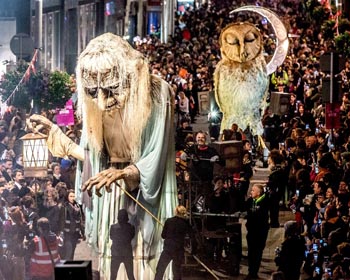
Annual Bram Stoker Festival over 3 days in October
Annual Bloomsday Festival over 5 days in June, celebrating the works of James Joyce
Annual Wilde Dublin Festival over 5 days in October, celebrating the life and legacy of Oscar Wilde
Don't Miss
The Dublin Literary Pub Crawl – 2 hours 20 mins, covers four pubs in Dublin’s centre (about half a mile) plus a visit to Trinity College front square. Approximately €16.
6 Books Set In Dublin
The Barrytown Trilogy – Roddy Doyle
Strumpet City – James Plunkett
Ulysses – James Joyce
Broken Harbour – Tana French
Dublin 4 – Maeve Binchy
The Ginger Man – JP Donleavy